
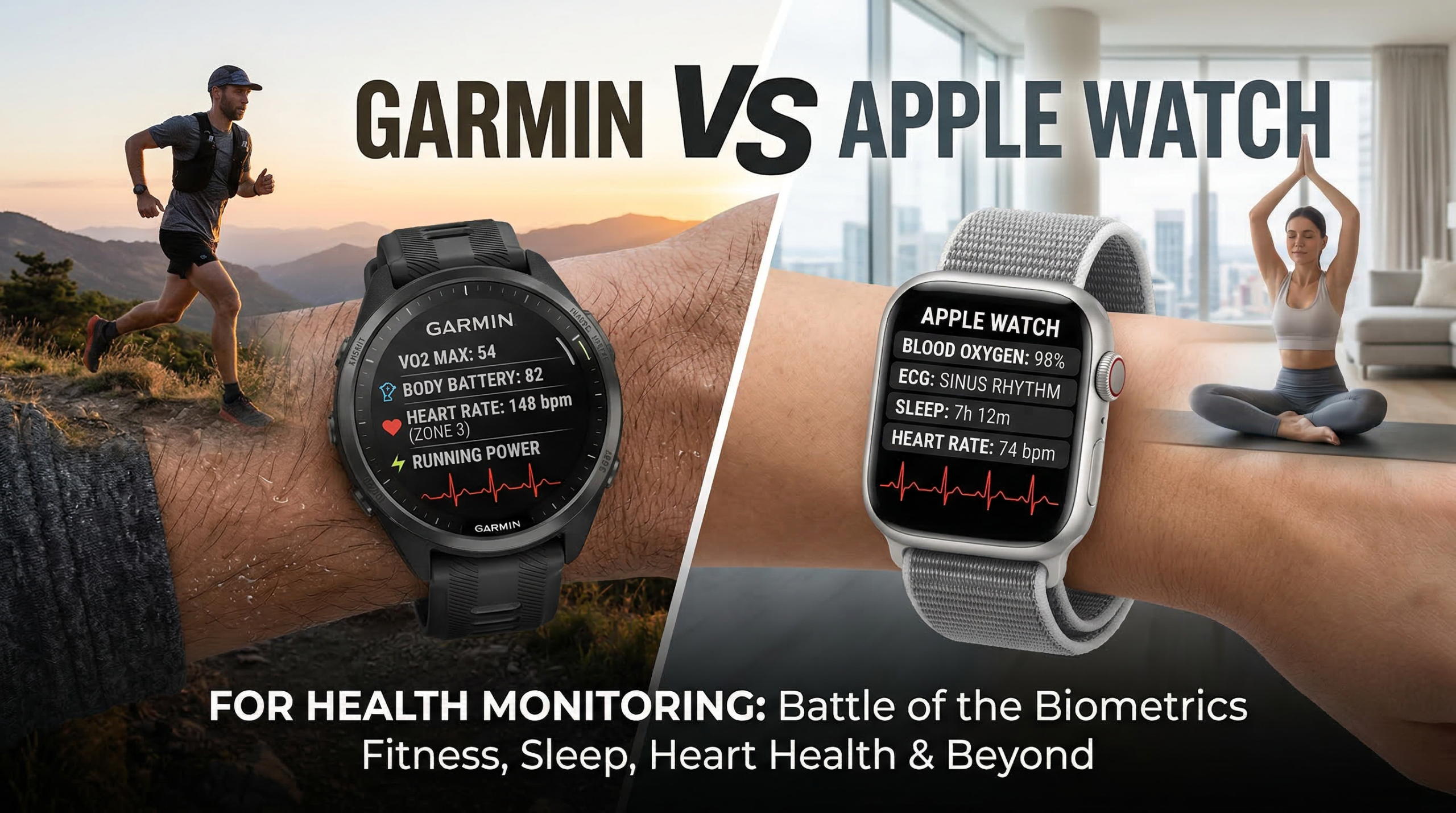
A warm welcome to Vertevia and our comparison blog post Garmin Vs Apple Watch For Health Monitoring. If you’re trying to keep a closer eye on your health, smartwatches are some of the most popular tools around. The two big names I see people choosing between are Garmin and Apple Watch. Both offer a ton of health features, but they work very differently and focus on different kinds of users.
Garmin is all about advanced fitness tracking and health metrics. You’ll find serious athletes and outdoor fans using their devices for everything from morning jogs to mountain hikes. Apple Watch, meanwhile, focuses on everyday health, sleek design, and easy integration with your iPhone. However, when it’s time to pick one for health monitoring, the differences matter.
If you’re comparing Garmin and Apple Watch for health monitoring, I’ll break down all the key points. We’ll go over features, performance, battery life, accuracy, and what it’s like to actually use them day to day.
Introduction to the Brands and Their Health Focus
What Garmin Offers
I’ve tried several Garmin models, mostly because of their reputation in the fitness space. Garmin watches come loaded with features for heart rate, advanced sleep tracking, stress monitoring, body battery (energy tracking), VO2 max, blood oxygen, and even hydration reminders. The vibe is super data driven, which is something a lot of committed athletes and data nerds love. With Garmin’s robust sensor platforms and ever improving onboard tools, even those who are not super competitive find value in tracking trends for personal health goals. Some Garmin models even go above and beyond by adding functions such as barometric altimeters, compass, and temperature sensors, expanding their usefulness to hikers, climbers, and explorers.
Garmin Is Best For
- Outdoor athletes (runners, bikers, hikers, swimmers, and triathletes)
- Anyone who wants in depth health stats
- People who need long battery life or GPS accuracy
Garmin Pros and Cons
Pros:
- Reliable tracking for a wide range of sports
- Lots of detailed metrics for health and fitness
- Weeklong battery (sometimes even more)
- Dedicated, rugged models built for harsh environments
Cons:
- Interface isn’t as slick or customizable as Apple’s
- Notifications and app support aren’t as strong
- Some models are a bit chunky on the wrist
- Some advanced features can be overwhelming for casual users
What Apple Watch Offers
Apple Watch approaches health with a focus on accessibility. I’ve used one to track steps and my heart rate, but it does more: ECG, blood oxygen, fall detection, medication reminders, workout detection, and even mental health tools. The tight tie ins with your iPhone and Apple Health ecosystem are pretty handy for most people. With every software update, Apple has rolled out more health features, including new mindfulness tools and even cycle and fertility tracking for women. Even those who don’t care much about fitness will appreciate handy reminders to stand, check breathing, or mind stress levels.
Apple Watch Is Best For
- People who want an all in one smartwatch for health and productivity
- Users who care about style and seamless iPhone pairing
- Everyday health tracking (including heart health, fall detection, menstrual tracking, and reminders)
Apple Watch Pros and Cons
Pros:
- User friendly and intuitive to use
- Great for everyday reminders, health checks, and quick notifications
- ECG and fall detection features are really smooth
- Best in class for seamless connection with your phone and other Apple devices
Cons:
- Battery usually needs a nightly recharge
- Serious fitness metrics aren’t as deep as on Garmin
- Works best if you have an iPhone
- Not as rugged, so may not be ideal for extreme adventures
Garmin vs Apple Watch Health Monitoring Score
Health Monitoring Showdown: Detailed Feature Comparison
Heart Rate Tracking
Why people care: Accurate heart rate tracking affects everything from basic fitness to heart health alerts.
Garmin: Uses optical sensors and, on some models, pairs with chest straps for super accurate readings during workouts. I’ve seen a clear difference during runs; tracking stays steady.
Apple Watch: Also uses optical sensors and does well for everyday heart rate, resting trends, and abnormal heart rhythm notifications. The ECG feature is a big plus for anyone tracking heart health.
My take: Both are accurate for daily use, but Garmin pulls ahead for people doing interval training or high intensity sports because of its chest strap support and workout data.
Sleep Tracking
Why people care: Sleep affects every part of health, especially recovery and mood.
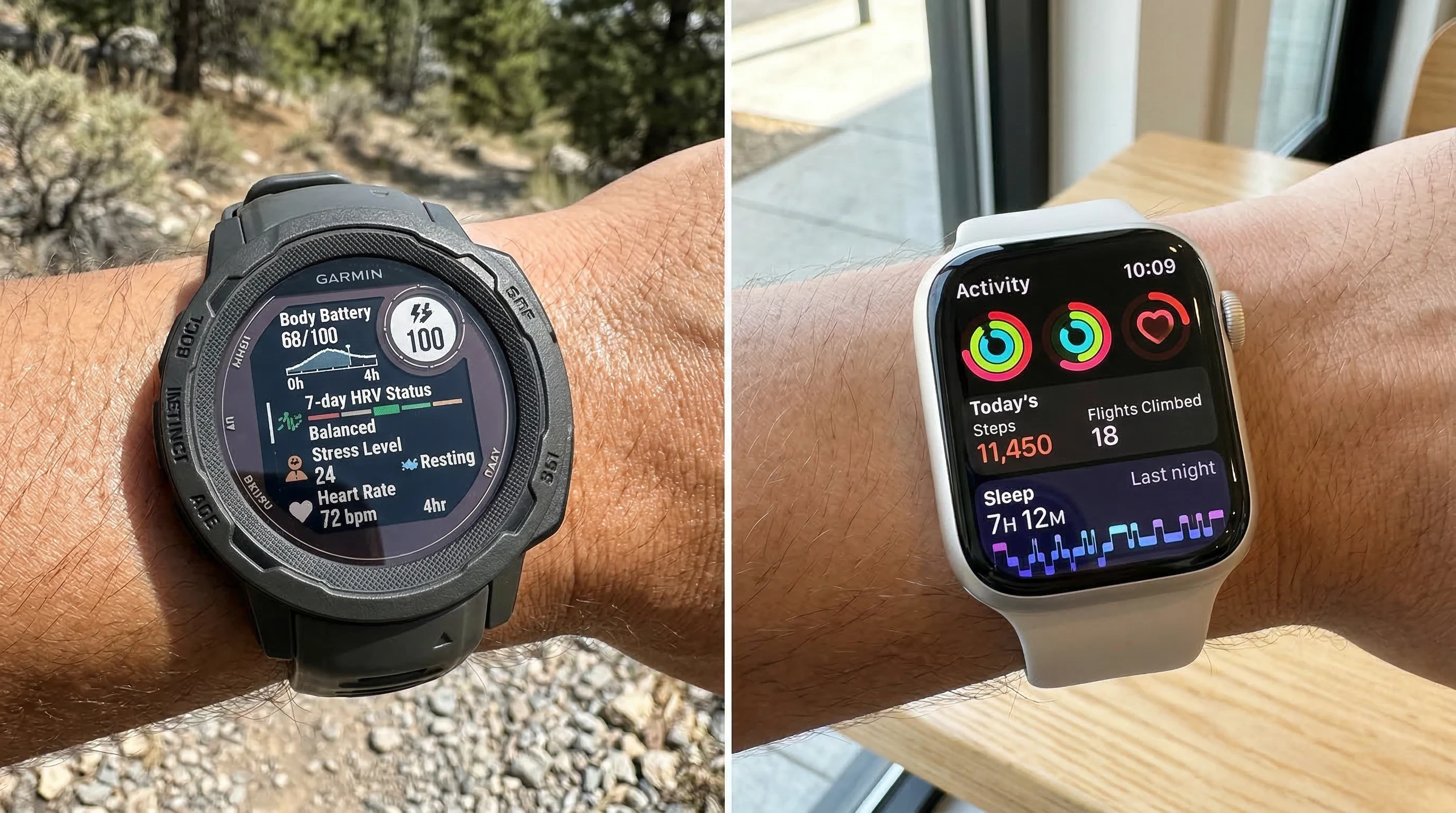
Garmin: Provides advanced sleep stages (light, deep, REM), sleep scores, and even insights about restfulness. Battery life means it’s easy to wear all night.
Apple Watch: Tracks sleep duration, time in bed, and sleep trends. Newer models add sleep stages, but analysis is more basic. Since you have to charge every day, you might forget to wear it overnight.
My take: Garmin is more reliable for sleep data and gives more detailed insights. Apple Watch is fine for basic sleep trends, especially if you’re not trying to dig into the weeds.
Blood Oxygen & Advanced Metrics
Why people care: Blood oxygen is a handy health indicator for sleep, workouts, and some medical conditions.
Garmin: Many new models measure blood oxygen (SpO2) all day and during sleep. VO2 max tracking and other workout focused metrics are included. There are also metrics oriented toward stress, body energy, and even advanced training readiness scores that help you plan your workouts safely.
Apple Watch: Newer models also read SpO2 on demand and track sleeping respiratory rates. VO2 max is estimated during workouts, but not as detailed or sport focused.
My take: Both do blood oxygen measurements. Garmin does a better job at tying this info into other fitness stats, so you can actually use the data to spot trends.
Activity and Workout Tracking
Why people care: Tracking workouts consistently helps with motivation and progress.
Garmin: Offers true multisport tracking, GPS routes, custom workout modes, and great compatibility with third party apps like Strava. You can also access training plans and performance condition ratings for running, cycling, swimming, and more.
Apple Watch: Detects workouts automatically, provides reminders, and tracks popular exercises. GPS is accurate but battery drops faster when it’s on. Apple’s fitness ecosystem also lets you compare activity levels with friends and earn achievement badges for streaks.
My take: If you’re logging different sports or want detailed breakdowns after a run or swim, Garmin makes it easier and offers more stats. Apple Watch covers most popular workouts smoothly but isn’t built for ultra long GPS sessions.
Health Alerts and Smart Coaching
Why people care: Early warnings and personalized coaching keep you on track.
Garmin: Sends out alerts for high or low heart rate, stress, body battery dips, and even hydration reminders. Coaching is built into the app for running plans and training loads.
Apple Watch: Excels with abnormal heart rate and rhythm alerts, fall detection, noise alerts for hearing, and medication reminders. Offers gentle nudges to stand, move, or breathe, which I find super useful during busy days.
My take: Apple Watch feels more supportive in day today health nudges. Garmin is better for proactive sports training and detailed guidance for improvement.
It’s also worth noting that both devices continue to add new health features each year. Updates to Garmin’s Body Battery scoring and readiness features mean users can structure their training more thoughtfully, avoiding burnout or injuries. Apple continues to tighten integration across the Health app, so information like blood sugar, temperature, or cycle tracking syncs across all devices. These ongoing improvements mean you’ll keep getting value as both ecosystems grow.
Garmin vs Apple Watch Health Monitoring Comparison
Garmin Watch Series
- Heart Rate Monitoring Excellent during workouts
- Sleep Tracking Detailed sleep stages
- Stress Tracking All day stress monitoring
- Body Battery Score Yes
- Blood Oxygen Yes
- Battery Life Up to 14 days
- Best For Fitness and endurance tracking
Apple Watch Series
- Heart Rate Monitoring Highly accurate daily tracking
- Sleep Tracking Reliable stage detection
- Stress Tracking Mindfulness and breathing tools
- ECG Monitoring Yes
- Blood Oxygen Yes
- Battery Life 18 to 36 hours
- Best For Advanced health and smartwatch features
Design, Battery, and Everyday Experience
Comfort and Style
I’ve noticed that Apple Watch feels lighter and fits better under sleeves, thanks to its sleek design and different case sizes. Garmin watches can be clunky, but newer models are slimming down. There’s also more variety in Garmin models, especially if you want something rugged for outdoors. You’ll find everything from minimalist, everyday models to tough as nails adventure watches that can keep up with mountain climbers.
Battery Life
This is a big one for me. Garmin models easily last five to seven days or more. I can wear one through a hiking weekend without having to hunt down a charger. Apple Watch, almost every version, needs a boost every night or at least every other day. This affects things like sleep tracking and using it for long events or trips where charging isn’t an option. If you do lots of GPS workouts or leave the display always on, that battery dips even faster with Apple Watch, making Garmin a more reliable pick if you want to use every feature all the time.
Ease of Use and App Support
The Apple Watch leads with its bright display, easy navigation, and snappy performance. Its apps for breathing, mindfulness, and reminders just work out of the box. Garmin menus take a little getting used to and don’t look as modern, but if you spend a lot of your time digging into data or setting custom workouts, you’ll actually appreciate the logic once you get used to it. Garmin Connect and Apple Health sync to third party apps, but Apple’s ecosystem is easier for most casual users. Apple also offers perks like Apple Fitness+, while Garmin excels for folks who want deeper metrics and long term stats analysis.
User Impressions and Popular Opinion
- Garmin: Gets regular praise for reliable tracking, long battery life, and no nonsense data. Some people think the menus look a little old school, but they stick with it because the data quality is so strong. Some outdoor athletes point to the rugged build and advanced GPS features as deciding factors over Apple Watch.
- Apple Watch: Users love the easy pairing, bright screen, and overall comfort. Most complaints come down to battery life or wanting more detailed sports tracking. Features like ECG and fall detection are especially popular for people who want health peace of mind. Many users also say that having everything sync smoothly to their iPhone adds a level of convenience you just can’t beat.
Overall Reputation: Both have strong fan bases. Garmin owners like deep health tracking. Apple Watch users point to polished design and smart daily help.
It’s also clear that both devices have spread like wildfire in their own circles. In fitness and outdoors communities, Garmin is a badge of commitment, while in tech and everyday wellness groups, Apple Watch dominates. There’s no doubt each brand has shaped how people approach daily health on their own terms.
Which Should You Pick for Health Monitoring?
Both Garmin and Apple Watch do a great job at health monitoring, but they suit different lifestyles.
Pick Garmin if you:
- Need detailed health and fitness tracking (heart rate, sleep, blood oxygen, more workout stats)
- Want weeklong battery worth relying on during travel or events
- Care most about outdoor adventures, training, or multi sport use
- Value in depth analysis and don’t mind a steeper learning curve
Pick Apple Watch if you:
- Use an iPhone and want smooth syncing across apps
- Prefer friendly reminders, easy to read displays, and stylish comfort
- Want everyday health support, quick ECG checks, or help with medication and fall detection
- Care about a wide range of wellness features and app options for general use
Summary
If your day is all about breaking personal training records or managing health through data, Garmin probably fits better. For everyday health reminders and seamless integration with your phone and apps, Apple Watch is super handy. Both watches have improved a ton in recent years, each adding more next level cool features every year. Either is worth checking out based on your health goals and lifestyle needs.
In summary, both smartwatches are great for monitoring health, just in different ways. It boils down to your priorities. Hardcore tracking and rugged use, or seamless daily reminders and universal design. Which side are you on? Drop your thoughts below if you have a favourite!
Thankyou
Thankyou for taking the time to read through this comparison article Garmin Vs Apple Watch For Health Monitoring. I do hope that it has given you food for thought regarding your purchase decision on these two top wearable health tech brands. For some extra reading, why not take a look at these related articles below:
Please let us know in the comments section below, which fitness tracker are you currently using or considering purchasing?
**Here is a bit of transparency. Our website www.vertevia.com does contain affiliate links and Amazon links. So, if you did make a purchase through the website, we may receive a small commission. This is at no extra cost to you whatsoever. It’s just a way for you to support us as we continue to bring you top quality content**
All the best!
Eamon