
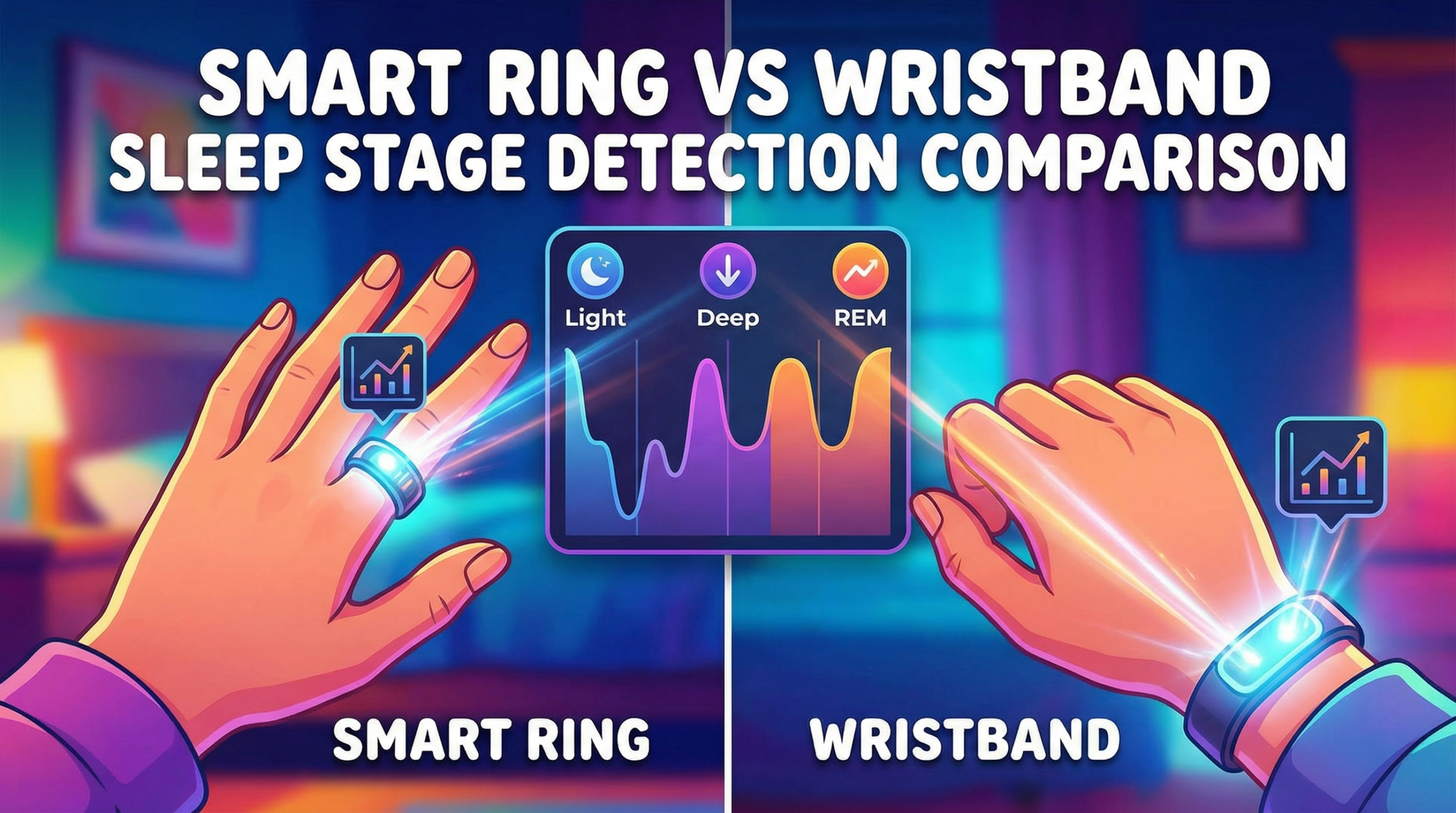
Welcome to Vertevia and our comparison review Smart Rings Vs Wristband Sleep Stage Detection Comparison. If you’re getting serious about understanding your sleep, you’ve probably seen smart rings and wristbands pop up as popular options. Both promise to track your rest and deliver details about your sleep stages, like how much time you spend in deep, light, or REM sleep. Each style comes with its own approach and strengths when it comes to sleep stage detection.
Smart rings look just like regular jewellery and fit right on your finger, while wristbands resemble a sleek watch or fitness tracker. They use sensors to keep a close eye on your nightly patterns, but there are some key differences in how they work and what kind of sleep insights you’ll get.
Here’s my all in one guide to comparing smart rings and wristbands for sleep stage detection, focusing on accuracy, user experience, features, and overall value.
Understanding the Devices
What is a Smart Ring?
Smart rings are compact wearable devices that go on your finger. They typically use optical sensors (like PPG) to track your heart rate, heart rate variability, skin temperature, and sometimes even blood oxygen levels. Because they sit on your finger, they’re super discreet and hardly noticeable, which makes them pretty appealing for people who don’t want to wear something bulky at night. Most models also look stylish enough to wear across a variety of occasions or all day without drawing much attention.
Who Should Consider Smart Rings?
- People who want unobtrusive sleep tracking
- Anyone sensitive to wristbands or bigger wearables at night
- Folks seeking a fashionable or minimal look
- Those wanting a device to wear around the clock, from work to the gym
Smart Ring Pros and Cons
Pros:
- Very comfortable for sleeping
- Impressive battery life (many last several days per charge)
- Easy to forget you’re wearing it
- Advanced sleep algorithms in some models
- Discreet and water resistant
Cons:
- Limited display or interface on the device itself
- Sensor contact can be tricky if the fit isn’t just right
- Status lights or vibrations are often missing, so feedback comes only in the app
- Some models are pricier than basic fitness bands
What is a Wristband?
Wristbands for sleep tracking, often called fitness trackers or smartbands, are worn around the wrist like a regular watch band. They usually pack more sensors, such as accelerometers, PPG heart rate monitors, gyroscopes, and sometimes even ECG or SpO2 sensors. Most include a small screen for quick information and controls, making it easy to check the time or your stats on the fly.
Who Should Consider Wristbands?
- Anyone who likes to check sleep data and stats on the device itself
- People interested in extra health tracking features, step counting, notifications, heart rate alerts
- Users who don’t mind a bulkier device at night
- Folks looking for versatility with workout features and activity tracking
Wristband Pros and Cons
Pros:
- Often more features beyond just sleep
- Display lets you view metrics and notifications easily
- Adjustable fit for most wrists
- Many models sync with third party health apps
- Different style options with changeable bands and faces
Cons:
- Can sometimes feel clunky or distracting during sleep
- Usually shorter battery life (some require daily charging)
- May leave marks or cause skin irritation for sensitive users
- Bulky or rigid models could disturb side sleepers
Main Factors to Compare
Sleep Stage Tracking Accuracy
Why it matters: If you want reliable sleep insights, your device needs to figure out light, deep, and REM sleep as accurately as possible.
Smart Rings: These typically gather heart rate and movement straight from the finger, where signals are usually pretty clean. Some, like Oura, use advanced algorithms and have validation studies backing their sleep stage estimates.
Wristbands: These also use heart rate and motion sensors but read from the wrist. The wrist has thicker skin and more movement, so readings can sometimes be a bit noisier. Still, bands from major brands have improved and can match or beat rings in some cases, especially when worn snugly.
Real world use: Both categories have made big advances, but neither matches the accuracy of a clinical sleep study. If you want sleep stage data close to reality, look for brands with published validation data or partnerships with sleep researchers. My experience has shown similar overall trends with both, but exact breakdowns rarely match perfectly night for night.
Comfort for All Night Use
Smart Rings: Extremely comfortable, almost unnoticeable after a few nights. Finger fit is critical; too loose or too tight, and tracking suffers.
Wristbands: Some people adjust quickly, but others wake up feeling the band or notice marks where it pressed against the skin. Thinner, lighter bands are an improvement. For side sleepers, a bulky device can be annoying.
My experience: If you’ve ever found a watch uncomfortable while sleeping, a smart ring will probably feel much nicer for tracking your sleep at night.
App Experience and Sleep Insights
Smart Rings: Most rely entirely on apps, showing a breakdown of your sleep, trends over time, readiness scores, and sometimes offering guided tips. Some also track naps and mood.
Wristbands: Usually show a summary on the device, and give more details and graphs in the app. Extras might include breathing rate, blood oxygen, and restlessness graphs.
Worth noting: The quality of the app really matters for both types. Smart ring apps sometimes feature beautiful visuals and in depth analysis, but this varies by brand.
Battery Life and Charging
Smart Rings: Some run up to a week on a charge. Charging takes about an hour with a small dock.
Wristbands: Expect two to seven days, depending on features like always on displays or GPS.
Real world tip: Adopting a nightly charging routine may help, but if you travel or forget, the longer battery life of some smart rings is a real plus.
Durability and Everyday Usability
Smart Rings: These are tough enough for daily wear, but can get scratched if you’re rough with your hands. Most are water resistant, and have no screen, so there are fewer breakable parts.
Wristbands: Reliable and often swim proof. However, screens can get scratched if you’re active. Bands are usually adjustable, with replaceable straps for different occasions or activities.
User Reputation and Reviews
- Smart Rings: Popular among tech fans, wellness enthusiasts, and people who want tracking without bulk. Common complaints focus on finger sizing, occasional sync glitches, or the need for more immediate feedback.
- Wristbands: Loved by people who want a true all in one health tracker. Some users complain about comfort over long periods, and others wish for better accuracy on sleep breakdowns. Most appreciate the holistic overview these devices give.
General reputation: Both devices have enthusiastic communities, and some folks use both simultaneously for the best of both worlds.
Which One Should You Pick?
Smart rings and wristbands both do a solid job at tracking sleep stages, but shine in different areas. The best pick really depends on what feels comfortable for you and how you plan to use the sleep data.
Choose a smart ring if you:
- Want a super low profile tracker you can wear without noticing it
- Put comfort and simple charging first
- Like subtle tracking for both night and day
Choose a wristband if you:
- Want quick stats directly on your device, anytime
- Need an all in one tracker for activity, steps, and more than just sleep
- Like being able to customize your band or wear a techy, watch like device
Q&A: Smart Ring vs Wristband Sleep Stage Detection
Q1. How accurate are smart rings compared to wristbands for sleep stages?
Smart rings often deliver very similar results to wristbands for basic sleep stage detection, especially with top brands. Both types are pretty solid at measuring total sleep time and big switches between different sleep phases, but there will be differences in the detailed breakdown compared to sleep lab equipment. The main variable is how well the device fits and the quality of its sensors.
Q2. Can I wear both a smart ring and a wristband at once?
Yes, you can. Some sleep enthusiasts do this to compare results or to make sure data is captured even if one device is struggling. Just know that differences are totally normal; wearing both is most useful for testing, not for daily use.
Q3. Which device is better if I move a lot while sleeping?
Smart rings tend to stay in place better if sized properly and usually aren’t affected by wrist movement. Wristbands can sometimes lose contact with the skin or pick up extra motion if the band is loose.
Q4. Do smart rings or wristbands track naps and daytime sleep?
Many smart rings and wristbands are now supporting nap tracking. Check the product details – rings often detect longer periods of rest automatically, while wristbands may expect you to set it manually.
Q5. How important is the app for sleep tracking?
The app is key, as that’s where you’ll see all your sleep details and trends. A good app can offer tips, reports, and help you make the most of your sleep data.
Q6. Will these devices work if I have tattoos, dry skin, or wear nail polish?
Accuracy can drop for both smart rings and wristbands if sensors can’t pick up signals through tattoos, thick skin, or nail polish in key areas. If you have tattoos right where the device will sit, it’s smart to check reviews or ask the brand first.
Q7. Which is better for allergy-prone skin?
Look for hypoallergenic materials before buying. Most smart rings use medical grade titanium or ceramic, which is usually gentler than some rubbery or woven wristbands. Silicone or cloth band trackers might cause sweat and irritation overnight for some people.
Q8. Do either of these devices help with sleep disorders?
They aren’t substitutes for medical equipment, but either option can help users spot issues with sleep routines or quality. Some brands have oxygen or heart rate monitoring that can alert you if something is off. However, always check with a healthcare provider if you think you have real sleep concerns.

Summary
Both smart rings and wristbands offer solid pathways to sleep stage detection. If comfort and minimal design are high on your wish list, a smart ring might be your best fit. If you want more health tracking features and don’t mind a bit more bulk, a wristband could be what you’re after. In the end, getting real data about your sleep can help you make small changes that lead to better rest, and these wearables smooth the way.
Got any questions, or have you tried both and want to share your experience? Add your thoughts below and join the conversation!
Thanks!
Many thanks for reading this article Smart Ring Vs Wristband Sleep Stage Detection Comparison. I hope it has provided value and helped with your purchase decision on which of these wearables will be best for your lifestyle. If you would like some extra reading on sleep tracking, take a look at these related article:
The 5 Best Sleep Monitoring Devices– Sleep Apnoea Detection Wearable For Home Use
5 Smartwatches That Track Sleep Stages – Apple Watch Vs Oura: Top Choice For Sleep Monitoring
Please let us know in the comments which brand of sleep monitoring device you are currently using or plan to buy in the future!
**Here is a bit of transparency. Our website www.vertevia.com does contain affiliate links and Amazon links. So, if you did make a purchase through the website, we may receive a small commission. This is at no extra cost to you whatsoever. It’s just a way for you to support us as we continue to bring you top quality content**
All the best!
Eamon