
Let’s look at sleep monitor comparisons with our article Apple Watch Vs Oura: Top Choice For Sleep Monitoring? Sleep has become one of the most talked about areas of modern health. People are no longer focused only on steps and calories. Instead, they want deeper insights into recovery, rest quality, heart health, and long term wellbeing.
Good sleep directly affects mental clarity, athletic performance, stress management, and overall quality of life. Because of this, sleep monitoring devices have moved from being optional gadgets to essential wellness tools.
Two of the most popular names in this space are Apple Watch and Oura. At first glance, they could not be more different. Apple Watch is a full featured smartwatch that tracks everything from workouts to messages and calls. Oura is a discreet smart ring designed almost entirely around sleep, recovery, and health metrics.
Both promise powerful sleep insights, yet their philosophies and user experiences vary dramatically. One is a multi function wearable computer on your wrist. The other is a minimalist health tracker on your finger.
So which is actually better for sleep monitoring?
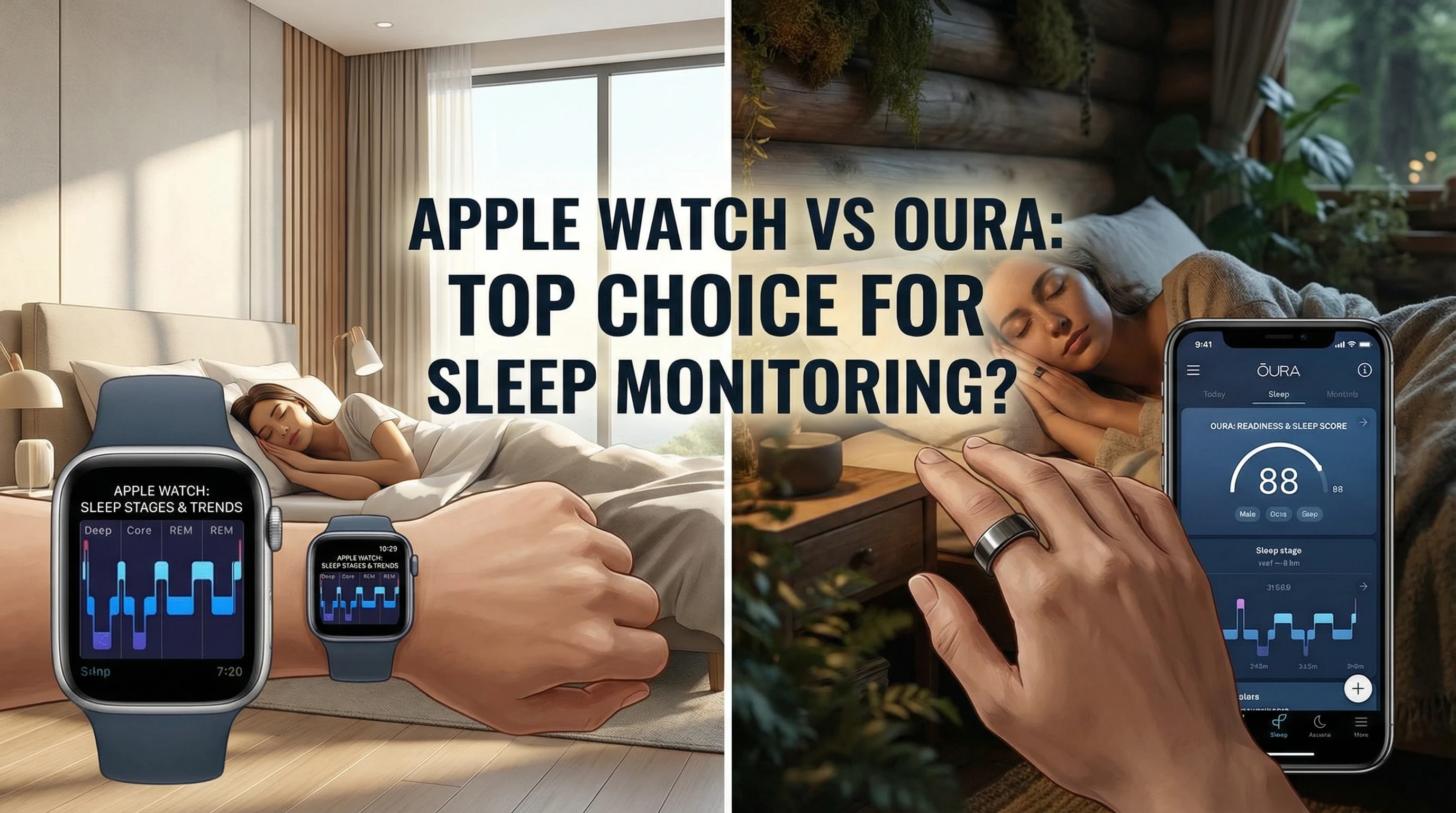
This comprehensive comparison will walk through every aspect of Apple Watch and Oura, including sleep tracking accuracy, features, comfort, battery life, pricing in USD and GBP, strengths, weaknesses, and ideal users. By the end, you will have a clear understanding of which device is the smarter investment for your lifestyle and sleep goals.
Why Sleep Monitoring Matters More Than Ever
Before diving into the products themselves, it helps to understand why sleep tracking has become so important.
Sleep is not simply about the number of hours spent in bed. Quality matters just as much as quantity. Healthy sleep includes multiple stages such as light sleep, deep sleep, and rapid eye movement sleep. Each stage supports different bodily functions, including muscle repair, memory consolidation, hormone balance, and immune health.
Poor sleep can lead to fatigue, slower recovery from exercise, increased stress, and reduced cognitive performance. Over time, chronic sleep deprivation can contribute to more serious health concerns.
Wearable technology helps people understand patterns that are otherwise invisible. By tracking heart rate, movement, temperature, and breathing changes, devices can estimate sleep stages and recovery quality. This allows users to adjust habits and improve rest.
Both Apple Watch and Oura aim to provide this insight, but they approach it in different ways.
Overview of Apple Watch
What is Apple Watch
Apple Watch is a full smartwatch ecosystem that includes fitness tracking, health monitoring, communication tools, apps, and smart features. While sleep tracking is included, it is only one part of a much larger platform.
The current models most relevant for sleep tracking include Apple Watch Series 9 and Apple Watch Ultra.
Key Apple Watch Features
Continuous heart rate monitoring
Blood oxygen tracking
Electrocardiogram capability
Sleep stage tracking
Workout tracking
Built in GPS
Notifications and calls
App ecosystem
Large bright display
Third party health apps
Apple Watch acts as an all in one lifestyle device rather than a dedicated sleep tracker.
Apple Watch Pricing
Standard models typically range from $399 to $499 USD or £399 to £499 GBP.
Premium models such as Ultra range from $799 USD or around £799 GBP.
Overview of Oura Ring
What is Oura Ring
Oura is a smart ring designed specifically for health tracking, sleep analysis, and recovery monitoring. It has no screen and no notifications. Instead, it focuses entirely on collecting data quietly in the background.
The latest generation is the Oura Ring Gen 3.
Key Oura Features
Advanced sleep stage tracking
Body temperature monitoring
Heart rate variability tracking
Resting heart rate trends
Readiness score
Stress tracking
Activity tracking
Small and lightweight design
Several days of battery life
Oura is built for subtle, continuous monitoring rather than interaction.
Oura Pricing
The ring typically costs around $299 to $399 USD or £299 to £399 GBP depending on finish
There is also a monthly subscription of approximately £6 USD or £6 GBP for full app access.
Feature Bar Graph
Design and Comfort Comparison
Comfort is critical for sleep tracking. If a device is uncomfortable, users will remove it at night, which defeats the purpose.
Apple Watch is worn on the wrist. Some users find it bulky during sleep, especially those sensitive to wrist accessories. The bright screen and notifications may also disturb rest if not configured carefully.
Oura Ring is extremely small and lightweight. Many users forget they are wearing it. Because it sits on the finger, it generally feels less intrusive than a watch.
For pure comfort during sleep, Oura often has the advantage.
Sleep Tracking Accuracy and Depth
Apple Watch provides solid sleep tracking with time asleep, time awake, and estimated sleep stages. It integrates well with the Health app and third party apps.
Oura goes deeper. It measures heart rate variability, temperature shifts, respiratory rate, and recovery metrics to generate detailed sleep scores and readiness insights.
For users who want scientific level detail and recovery analysis, Oura usually provides more depth.
Health Metrics Beyond Sleep
Apple Watch offers broader health coverage. It supports electrocardiogram readings, fall detection, fitness workouts, maps, messaging, and more.
Oura focuses on wellness signals such as stress, recovery, and readiness. It does not provide communication features or full smartwatch functions.
If you want a multipurpose device, Apple Watch wins. If you want a dedicated health tracker, Oura shines.
Battery Life
Oura typically lasts four to seven days on one charge.
Apple Watch usually lasts around eighteen to thirty six hours.
This difference is significant. Frequent charging can interrupt sleep tracking consistency.
Oura clearly leads in battery longevity.
Pros and Cons Breakdown
Apple Watch Pros
Comprehensive smartwatch features
Excellent fitness tracking
Bright and responsive display
Wide app ecosystem
Strong health sensors
Apple Watch Cons
Shorter battery life
Bulkier for sleep
Sleep tracking not as specialized
Oura Pros
Exceptional sleep and recovery insights
Very comfortable to wear overnight
Long battery life
Minimalist design
Strong readiness scoring
Oura Cons
Subscription required
Limited smart features
Higher upfront cost for a ring
Who Apple Watch Is Best Suited For
Apple Watch suits users who want an all purpose device that handles fitness, notifications, calls, and health tracking in one place. It is ideal for active individuals who enjoy workouts, apps, and smartwatch functionality.
Who Oura Ring Is Best Suited For
Oura is perfect for people focused on sleep optimization, recovery, and subtle health tracking. It suits users who prefer minimal distractions and maximum comfort.
Comparison Table
| Feature | Apple Watch | Oura Ring |
|---|---|---|
| Sleep Stage Tracking | Light, deep, REM | Light, deep, REM with readiness score |
| Comfort for Overnight Wear | Good with soft bands | Excellent ultra light ring design |
| Battery Life | 18 to 36 hours | Up to 7 days |
| Heart Rate Monitoring | Continuous optical tracking | Continuous high sensitivity sensors |
| Heart Rate Variability | Available | Advanced nightly analysis |
| Blood Oxygen | Yes | Yes |
| Temperature Tracking | Wrist temperature trends | Detailed nightly body temperature |
| Smartwatch Features | Calls, apps, notifications, GPS | Minimal smart features |
| Workout Tracking | Advanced sports modes and GPS | Basic activity tracking |
| Form Factor | Full smartwatch display | Discreet ring |
| Best For | All in one fitness and smart use | Sleep and recovery focused users |
| Starting Price | From 399 USD or 399 GBP | From 299 USD or 299 GBP plus membership |
Frequently Asked Questions
Q1. Which device provides more accurate sleep tracking overall, Apple Watch or Oura Ring
Both devices deliver reliable sleep tracking, but Oura generally offers more refined and consistent accuracy specifically for sleep staging and recovery analysis. Oura uses a combination of heart rate variability, resting heart rate, body temperature trends, breathing rate, and movement data to estimate light sleep, deep sleep, and rapid eye movement sleep. This multi sensor approach helps it detect subtle physiological changes that occur overnight.
Apple Watch relies primarily on movement and heart rate data, which still provides solid estimates but may not capture recovery depth as precisely. Independent testing and user reports often show Oura producing more stable and detailed sleep stage breakdowns. If sleep accuracy is your top priority, Oura tends to have a slight edge. If you want good sleep tracking combined with many other smartwatch features, Apple Watch remains very capable.
Q2. Is the Apple Watch comfortable enough to wear all night while sleeping
Comfort largely depends on personal preference, but many people find wearing a watch overnight less comfortable than wearing a ring. Apple Watch sits against the wrist and can feel bulky, especially for side sleepers or those who rest their hands under pillows. The case thickness and strap can sometimes create pressure points during the night.
That said, newer Apple Watch models are lighter and slimmer than earlier versions, and many users adapt quickly. Using a soft sport or fabric strap often improves comfort significantly. However, if you are highly sensitive to wearing accessories in bed or prefer something barely noticeable, Oura Ring usually feels more natural and less intrusive.
Q3. How detailed are the sleep insights and reports on each device
Oura focuses heavily on detailed insights and long term trends. Each morning, the app provides a sleep score that evaluates duration, efficiency, restfulness, timing, and deep sleep quality. It also explains how these factors impact recovery and daily performance. Over time, it identifies patterns and suggests lifestyle adjustments such as earlier bedtimes or lighter training days.
Apple Watch provides sleep duration, time in each stage, and bedtime consistency through the Health app. While useful, the presentation is simpler and less coaching oriented. For users who want in depth interpretation and actionable advice, Oura offers more advanced analytics. Apple Watch presents the essentials but does not go as deeply into recovery science.
Q4. Which device has better battery life for consistent sleep monitoring
Battery life plays a major role in tracking consistency. Oura typically lasts between four and seven days on one charge, which means you rarely have to think about charging. This makes it easy to wear continuously without gaps in your data.
Apple Watch generally lasts between eighteen and thirty six hours depending on usage. Because of this, many users charge it daily, often in the evening or overnight. Charging during sleep can lead to missed data unless you plan carefully. For users who want uninterrupted tracking with minimal maintenance, Oura clearly provides a more convenient experience.
Q5. Can both devices track naps and irregular sleep schedules
Yes, but they handle it differently. Oura automatically detects naps and short rest periods throughout the day. These are added to your recovery metrics and can positively affect your readiness score. This is helpful for shift workers, parents, or anyone with non traditional sleep patterns.
Apple Watch can track sleep sessions when sleep focus mode is enabled, but nap detection is less automatic and may require manual adjustments or third party apps. If your sleep schedule varies or includes frequent daytime naps, Oura tends to provide more seamless tracking.
Q6. Which is better for overall fitness and exercise tracking alongside sleep
Apple Watch is significantly stronger for active fitness tracking. It supports a wide variety of workouts including running, cycling, swimming, strength training, and high intensity sessions. It offers built in GPS, real time metrics, pace tracking, and integration with countless fitness apps. For athletes and gym goers, it acts as a complete training companion.
Oura tracks activity levels and daily movement but does not provide the same depth for live workout monitoring. It is designed more for recovery and wellness than performance training. If your focus is intense exercise tracking plus sleep, Apple Watch is usually the better all around tool.
Q7. Does Oura justify its subscription cost compared to Apple Watch
Oura requires a monthly subscription to unlock detailed insights, long term trends, and advanced features. Some users hesitate at the extra cost, but many feel it is worthwhile because of the depth of analysis and personalized recommendations provided. The subscription transforms raw data into meaningful guidance, which can lead to real lifestyle improvements.
Apple Watch does not require a subscription for its core health features, which may appeal to budget conscious buyers. However, some advanced fitness apps or services may still charge fees separately. Whether Oura is worth the subscription depends on how seriously you value detailed sleep coaching and recovery tracking.
Q8. Which device offers better long term value for improving sleep quality
Long term value depends on how you plan to use the device. Oura is built specifically to improve sleep and recovery habits. Its nightly scores, readiness metrics, and trend analysis can encourage smarter bedtime routines, better stress management, and healthier training loads. For people focused primarily on optimizing rest and overall wellness, it often delivers more meaningful results over time.
Apple Watch offers broader value because it combines sleep tracking with communication, apps, and everyday convenience. If you want one device that replaces multiple gadgets while still providing good sleep monitoring, it can be the more practical investment. Ultimately, the best value comes from the device you consistently wear and engage with daily.
Conclusion
Apple Watch and Oura approach sleep monitoring from two very different perspectives. Apple Watch delivers a versatile smartwatch experience with strong fitness and health tracking. Oura focuses almost entirely on sleep and recovery with unmatched comfort and battery life.
If you want one device that does everything from workouts to messages, Apple Watch is likely the better investment. If your main goal is improving sleep, recovery, and long term health trends with minimal distractions, Oura may be the superior choice.
Ultimately, the best device is the one you will wear every night. Consistency is what turns data into meaningful improvements. Choose the wearable that fits naturally into your life, and your sleep will benefit the most.
Many Thanks!
Many thanks for taking the time to read through this comparison article Apple Watch Vs Oura: Top Choice For Sleep Monitoring? I really do hope that it has provided you with all of the relevant information on these two brands. If you would like some extra reading, take a look at these informative articles below.
Related Articles
Please let us know in the comments which brand and type of sleep monitoring device you are currently using or plan to buy in the future!
**Here is a bit of transparency. Our website www.vertevia.com does contain affiliate links and Amazon links. So, if you did make a purchase through the website, we may receive a small commission. This is at no extra cost to you whatsoever. It’s just a way for you to support us as we continue to bring you top quality content**
All the best!
Eamon