

Welcome to Vertevia and our comparison article titled Oura Ring Vs Whoop For Sleep Tracking. Trying to improve my sleep has introduced me to all sorts of wearables, but the Oura Ring and Whoop Strap always seem to top every recommendation list. Both promise all in one sleep tracking and a load of insights into recovery, readiness, and overall health. While some features do overlap, the vibe and approach from each device feel pretty unique.
I’ve spent time using both, comparing the data and user experience, and combing through feedback from others in the sleep tracking business. If you’re stuck between Oura and Whoop for sleep tracking, I’ll break down all the important stuff here. We’ll look at what each one does best, what you might not love, and how they stack up for tracking your nights.
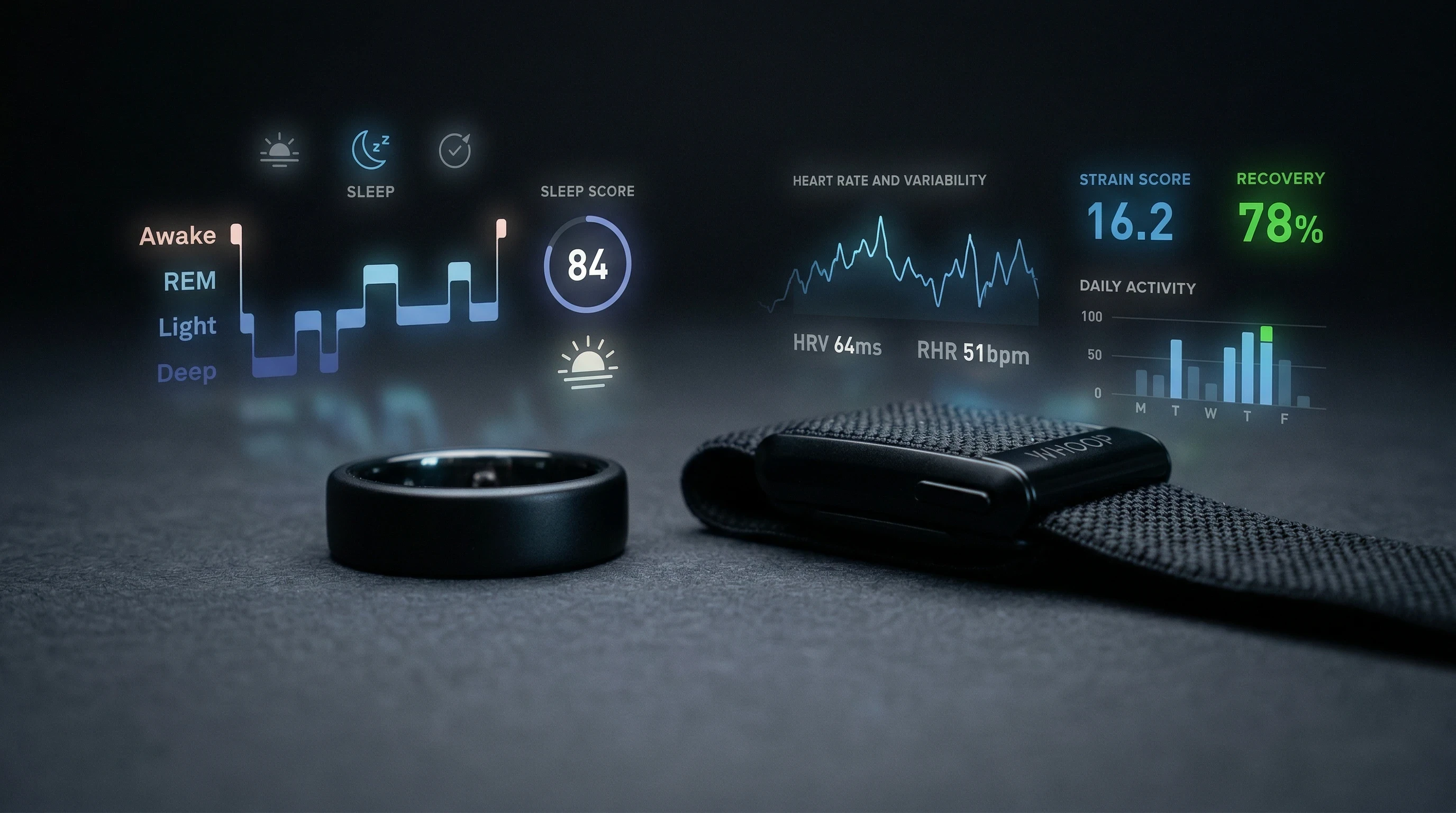
Oura Ring and Whoop: Quick Breakdown
What is the Oura Ring?
The Oura Ring is a sleek smart ring that tracks sleep, recovery, and general wellness right from your finger. It uses sensors to check body temperature, heart rate, blood oxygen, and movement, working quietly while you wear it 24/7. The app gives you daily scores for sleep, readiness, and activity, plus more detailed breakdowns for folks who want to check out extra data. It looks like a chunky wedding band, comes in jewellery style finishes, and focuses a lot on providing clear, actionable insights without constantly buzzing you or lighting up with notifications.
Best For
- People who want discreet sleep tracking without wearing a bulky device
- Those looking for temperature and body data to get ahead of illness or cycle tracking
- Anyone who likes straightforward, easy to read scores and summaries in their app
Pros & Cons of Oura Ring
Pros:
- Super comfortable since it’s just like a ring
- Long battery life (usually five to seven days)
- Best in class sleep stage detection and readiness feedback
- Good for travel or people sensitive to wrist wearables
Cons:
- Up front cost is pretty high and there’s a subscription for the all in one data
- Might not be ideal if you do a lot of dumbbell weightlifting (risk of scratching the ring)
- Some people have trouble with the fit or lose the ring
What is the Whoop Strap?
Whoop is a strap you wear on your wrist (or sometimes the upper arm) that pays a lot of attention to recovery, strain, sleep, and heart data. It comes with no screen, just a simple band that pairs with your phone. Where Oura leans into readiness and sleep, Whoop focuses more on fitness recovery, activity, and training load with all sorts of advanced metrics for athletes and anyone chasing peak performance. Whoop’s battery can be charged without taking the band off, and it’s comfy enough to wear all day and night.
Best For
- Athletes or gym goers interested in recovery and training optimization
- People wanting detailed strain and HRV (heart rate variability) data
- Anyone who prefers a strap over jewellery
Pros & Cons of Whoop Strap
Pros:
- Great for tracking recovery and adjusting workouts based on heart data
- Continuous sync and auto upload to your account
- No need to ever take it off for charging thanks to its slide on charger
- App is loaded with performance and sleep habits data
Cons:
- Always requires a subscription (no data access without it)
- No display for real time stats (have to use the app for everything)
- Wrist based tracking may be less comfy for some people at night
Oura Ring vs Whoop Sleep Tracking Performance
Sleep Accuracy
HRV Tracking
Sleep Insights
Comfort
Battery Life
Head to Head: Sleep Tracking and Other Features
Sleep Stages and Accuracy
Why it matters: Getting accurate details about deep, light, and REM sleep plus interruptions is pretty helpful if you’re working on sleep quality.
Oura Ring: Uses multiple sensors including temperature, heart rate, and oxygen to check sleep stages and offers clear night breakdowns. It shows how long you spend in each stage, wake periods, and includes trends over weeks or months. Many sleep enthusiasts find it reliable and close to what you’d get in some sleep labs.
Whoop: Tracks similar stages with a focus on recovery, adding respiratory rate and heart rate variability into the mix. The insights show how last night’s sleep lines up against your baseline. Some users feel Whoop offers a deeper jump into recovery data if you’re tuned into recovery science, but both devices are generally spot on for regular home tracking.
Which stands out: Oura for no fuss daily sleep breakdowns; Whoop for next level data if you’re optimizing training as well as sleep.
Readiness and Recovery Tracking
Why it matters: Knowing whether you should push yourself or take it easy the next day can make a big difference in energy, mood, and overall health.
Oura Ring: Gives you a readiness score that considers sleep, activity, body temp, and resting heartbeat. If something’s off, for example, maybe you didn’t sleep well or your body temp is high, you’ll get quick, simple advice on how to recover.
Whoop: Offers a recovery percentage and daily green yellow red recovery signal. It relies heavily on HRV and resting heart rate trends. If you’re someone who loves to geek out over bio feedback, Whoop makes this process pretty engaging.
Which stands out: Whoop if you want athletic grade insights. Oura if you want balance and actionable advice for regular life.
Comfort and Wearability
Why it matters: If a device bothers you at night, your sleep will not be as restful, and you might just stop wearing it.
Oura Ring: Easy to forget you’re even wearing it. It comes in multiple ring sizes, and most users can keep it on 24/7 (even in the shower or sauna).
Whoop: Soft, fabric band is more comfortable than old school fitness bands. It’s really easy to move the tracker to an upper arm sleeve if needed. A small number of people experience wrist irritation or just don’t like having anything on their arm at night.
Which stands out: Oura for anyone sensitive to wrist devices. Whoop for people who like flexible band placement.
Battery Life and Charging
Why it matters: No one likes charging gadgets every single day.
Oura Ring: Lasts five to seven days per charge, goes from zero to full in about 80 minutes.
Whoop: Lasts four to five days, but you never take it off; the charger slides on the band while you wear it.
Which stands out: Tie; depends if you care about using it while charging (Whoop) or slightly longer duration between charges (Oura).
Health and Wellness Data
Why it matters: Beyond sleep, you might want body temperature info, stress cues, or even cycle prediction.
Oura Ring: Has advanced temperature sensing, tracks blood oxygen, and predicts periods or illness for some users.
Whoop: Shares info on stress, daily strain, and respiratory rate. It doesn’t do temperature but does focus more on the impact of activity and workouts.
Which stands out: Oura for everyday health monitoring. Whoop for fitness recovery enthusiasts.
App Design and Ease of Use
Why it matters: A good looking and friendly app makes the info much more relatable and actionable.
Oura Ring: Simple, visual, easy to use, with clear insights and trending graphs beginners can understand.
Whoop: Modern and detailed, but packed with graphs, great for data nerds and may feel overwhelming if you want a simple summary.
Which stands out: Oura is loved for simplicity. Whoop for jumping into your data.
Pricing and Value
Why it matters: No one wants to overpay, and seeing what you get for your money helps manage expectations.
Oura Ring: Usually a one time hardware payment (ranges around $300 dollars) plus a monthly subscription for all in one insights (about $6 per month).
Whoop: Hardware feels “free,” but it’s tied to a mandatory subscription (about $30 a month, or less with longer commitment).
Which stands out: Oura if you’d rather pay up front and keep monthly costs low. Whoop if you want to spread out spending.
Oura Ring vs Whoop for Sleep Tracking
Oura Ring
- Sleep Stage Tracking Highly detailed REM, deep and light sleep
- Sleep Score Daily recovery readiness score
- Heart Rate Variability Advanced HRV analysis
- Temperature Tracking Yes
- Comfort Lightweight smart ring
- Battery Life 4 to 7 days
- Best For Sleep focused health insights
Whoop Strap
- Sleep Stage Tracking Accurate sleep stage detection
- Sleep Coach Personalized sleep recommendations
- Heart Rate Variability Advanced recovery tracking
- Strain Monitoring Yes
- Comfort Soft wearable strap
- Battery Life Around 5 days
- Best For Athletes and recovery monitoring
Frequently Asked Questions
Q1. Which device is more accurate for sleep tracking, Oura Ring or Whoop?
Both devices provide highly advanced sleep tracking, but they approach sleep analysis in slightly different ways. Oura Ring is widely recognised for its detailed sleep stage detection, including light sleep, deep sleep, and REM sleep. Its ring based sensors sit close to the finger arteries, which helps deliver consistent heart rate and temperature data during the night.
Whoop also tracks sleep stages and recovery metrics, but its main strength lies in how it connects sleep quality with daily strain and recovery scores. While both devices are accurate, many users find Oura slightly more precise when analysing sleep stages, while Whoop excels at explaining how sleep impacts overall recovery and athletic performance.
Q2. Do Oura Ring and Whoop track REM and deep sleep?
Yes, both devices track REM sleep, deep sleep, and light sleep stages. These sleep stages are calculated using heart rate variability, motion detection, and respiratory signals recorded during the night.
Oura Ring presents sleep stages in a detailed timeline that allows users to see exactly when they entered different sleep phases. Whoop also shows sleep stages but focuses more heavily on recovery insights and daily readiness scores. For users who want a clear breakdown of sleep architecture, Oura tends to present the information in a more detailed and visually organised way.
Q3. Which device is more comfortable to wear while sleeping?
Comfort during sleep is an important factor for many users. Oura Ring is extremely lightweight and worn on the finger, which means there is nothing around the wrist while sleeping. Many users forget they are even wearing it after a short adjustment period.
Whoop is worn as a wrist strap or body strap, which some people may notice while sleeping. However, the strap is soft and flexible, and many athletes wear it comfortably overnight. In general, people who dislike wearing watches to bed often prefer the ring style design.
Q4. How long does the battery last on Oura Ring and Whoop?
Battery life is one of the biggest differences between these two devices. Oura Ring typically offers around four to seven days of battery life depending on usage and sensor activity. Charging usually takes less than one hour.
Whoop can last about four to five days on a single charge. One advantage of Whoop is that it uses a removable battery pack that allows charging while still wearing the device. This means users can continue tracking without removing the strap, which is convenient for people who want continuous data collection.
Q5. Do Oura Ring and Whoop require a subscription?
Whoop operates entirely on a subscription model. Users pay a monthly or annual membership fee to access their data and analytics platform. The device itself is usually included as part of the membership package.
Oura Ring requires an initial purchase of the ring, and many of its advanced insights are available through a monthly membership. Without the subscription, basic sleep and activity data are available, but deeper analytics and readiness insights require the membership plan.
Q6. Which device provides better sleep insights and recommendations?
Both devices provide detailed insights, but their focus is slightly different. Oura Ring specialises in detailed sleep analysis, readiness scoring, and personalised suggestions for improving sleep quality. It also tracks temperature changes, which can reveal recovery patterns or illness signals.
Whoop focuses more on performance recovery. Its platform connects sleep, strain, and heart rate variability into one recovery score. This makes Whoop particularly useful for athletes who want to understand how sleep affects training performance and physical recovery.
Q7. Can these devices detect sleep problems or disorders?
Neither Oura Ring nor Whoop is designed to diagnose medical sleep disorders. However, they can highlight patterns that suggest poor sleep quality, inconsistent sleep schedules, or unusually elevated heart rate during the night.
For example, both devices may show frequent awakenings, low deep sleep percentages, or irregular breathing patterns. These insights can help users identify potential issues and encourage them to seek professional advice if necessary. They are best used as personal wellness monitoring tools rather than medical diagnostic devices.
Q8. Which device is better overall for sleep tracking?
The best choice depends on the user’s priorities. Oura Ring is often considered one of the most advanced consumer devices for pure sleep tracking. Its finger sensors, temperature monitoring, and detailed sleep analysis make it extremely effective for understanding sleep patterns.
Whoop is better suited for users who want sleep tracking integrated with training recovery and performance analytics. Athletes who monitor strain, recovery, and readiness will appreciate how Whoop connects sleep quality with daily performance metrics.
In general, users focused purely on sleep insights may prefer Oura Ring, while athletes who want sleep data linked to training performance may benefit more from Whoop.
User Opinions and Community Buzz
- Oura Ring: People love its comfort and the variety of health insights. The look and feel win a ton of fans, especially for those who do not want to advertise they’re wearing a tracker. Sometimes folks wish there were more in app workouts or live metrics, but for sleep it gets lots of praise. Oura’s discreet design and jewellery inspired look make it popular with those who want something stylish and functional. The summaries in the app are easy to understand, and users often mention how tracking temperature trends or sleep score gives them a boost in their daily routine.
- Whoop: Really popular in fitness communities and among athletes, especially those interested in heart rate variability and recovery. Some newer users feel overwhelmed by all the stats, while others swear by the motivational weekly and monthly reports. The constant subscription sparks mixed reviews. Many fans like how Whoop tracks strain from workouts and how it nudges them to focus on recovery. Others appreciate community features, like joining competitive groups or comparing strain and sleep trends with friends, making the platform more interactive for active users.
Reputation overall: Both collect loyal fans. Oura is often seen as the goto for wellness and easy sleep tracking, while Whoop is the favorite for training recovery and those who crave mountains of health data.
Who Should Pick Each Device?
After living with both the Oura Ring and Whoop Strap, I’d match them to a few different kinds of users:
Pick Oura Ring if you:
- Value comfort and minimalism in your wearables
- Want a device focused mainly on sleep, recovery, and everyday wellbeing
- Prefer straight forward daily summaries that are easy to understand
- Like the option for temperature and health trend data
- Are looking for something discreet that seamlessly fits your style
Pick Whoop Strap if you:
- Are focused on athletic training, fitness performance, or advanced recovery science
- Appreciate deep, continuous tracking of activity and HRV
- Don’t mind using a subscription based device with regular detailed stats and coaching
- Don’t mind having something on your wrist all day and night
- Enjoy joining group challenges and sharing stats in a fitness oriented community
Summary
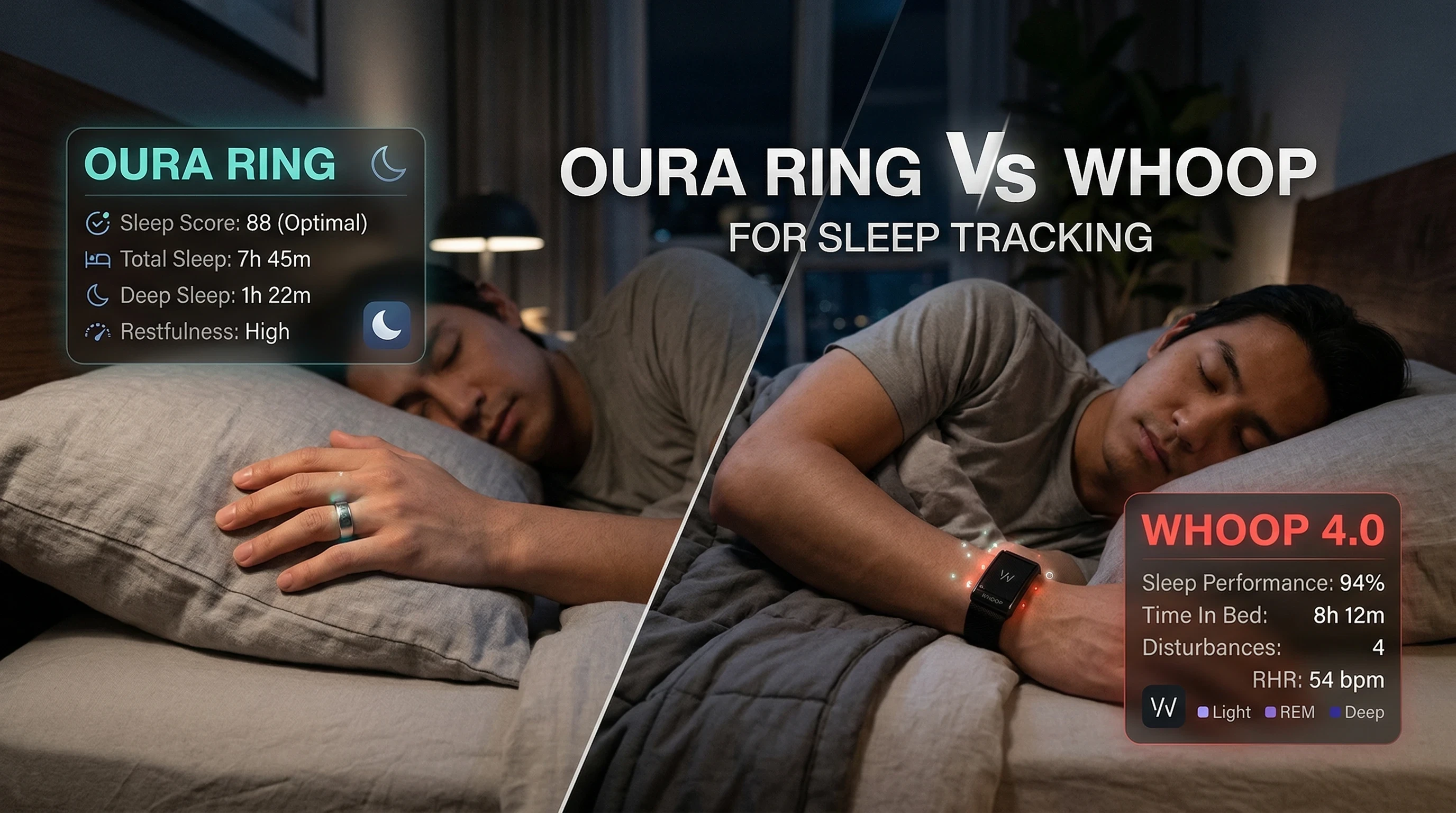
Both Oura Ring and Whoop Strap do a great job tracking sleep, but they come from different angles. Oura Ring feels like the best fit for anyone who just wants to understand sleep patterns, feel healthier, and keep their data experience simple and stylish. Whoop is a powerhouse for athletes or anyone who craves a massive amount of bio feedback, especially if recovery and performance are at the top of the wish list.
I’ve found both to be accurate and pretty reliable, but the right pick just depends on your style, tech preferences, and what sort of info makes you feel motivated. Whichever device you lean toward, either can make tracking your sleep and health a way less mysterious, and way more actionable, part of your life.
Thankyou
Thankyou for reading this comparison article titled Oura Ring Vs Whoop For Sleep Tracking. I do hope that it has helped you to make an informed purchase decision on which of these two wearable health tech heavyweights to purchase. If you would like some more reading on sleep tracking, take a look at these related articles below.
Please let us know in the comments which type and brand of sleep tracking wearable device you are currently using or planning to purchase.
**Here is a bit of transparency. Our website www.vertevia.com does contain affiliate links and Amazon links. So, if you did make a purchase through the website, we may receive a small commission. This is at no extra cost to you whatsoever. It’s just a way for you to support us as we continue to bring you top quality content**
All the best!
Eamon
Thanks for an excellent article which fully explains the comparison between these two brands.
In your personal opinion, do you prefer Oura Ring or Whoop?
Paul
Hello Paul, many thanks for your much valued comment and question. Preference really depends on what you want your wearable to provide for you. I do really like the Oura Ring selection. Mainly because of ease of wear. You hardly notice that you are wearing one compared to a strap by Whoop.
Eamon