
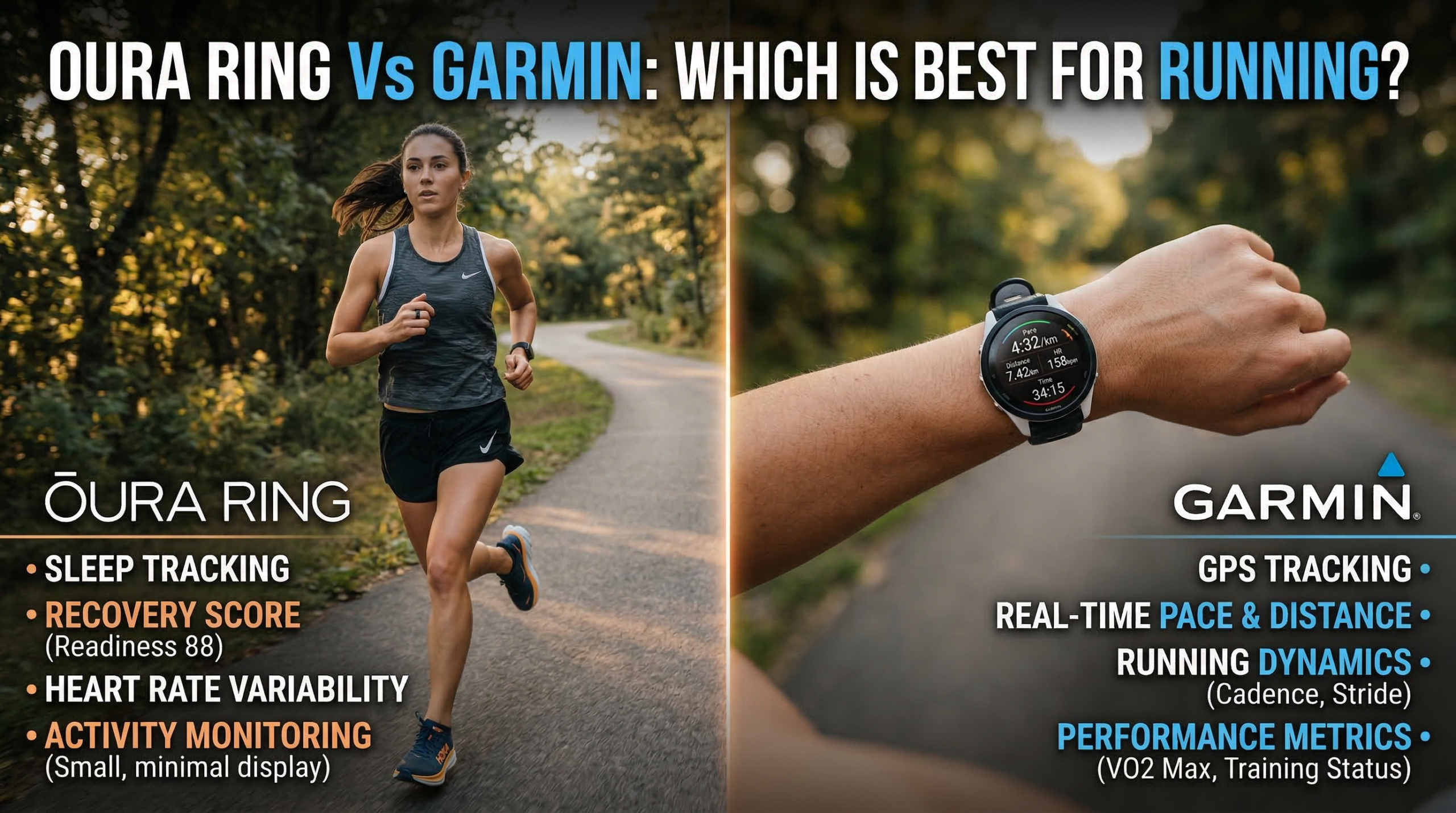
Oura Ring Vs Garmin: Which Is Best For Running? That’s our title for this comparison review. When you get serious about your running routine, a wearable tracker can be pretty handy for holding yourself accountable and improving performance. Two names come up a lot in running communities, Oura Ring and Garmin watches. Both offer powerful tracking and health insights, but they go about things in really different ways.
I’ve used both for running, and I’ve spent time comparing the data, the feel, and the features. Oura Ring feels more subtle and focuses on overall health, sleep, and recovery. Garmin focuses on on the run stats and custom training plans. Picking between them really comes down to what you want your wearable to do for you.
If you find yourself debating Oura Ring or Garmin for running, this guide is for you. I’ll break down key features, user experience, what each is best at, how accurate their running metrics are, and which one gives you the best value for your money.
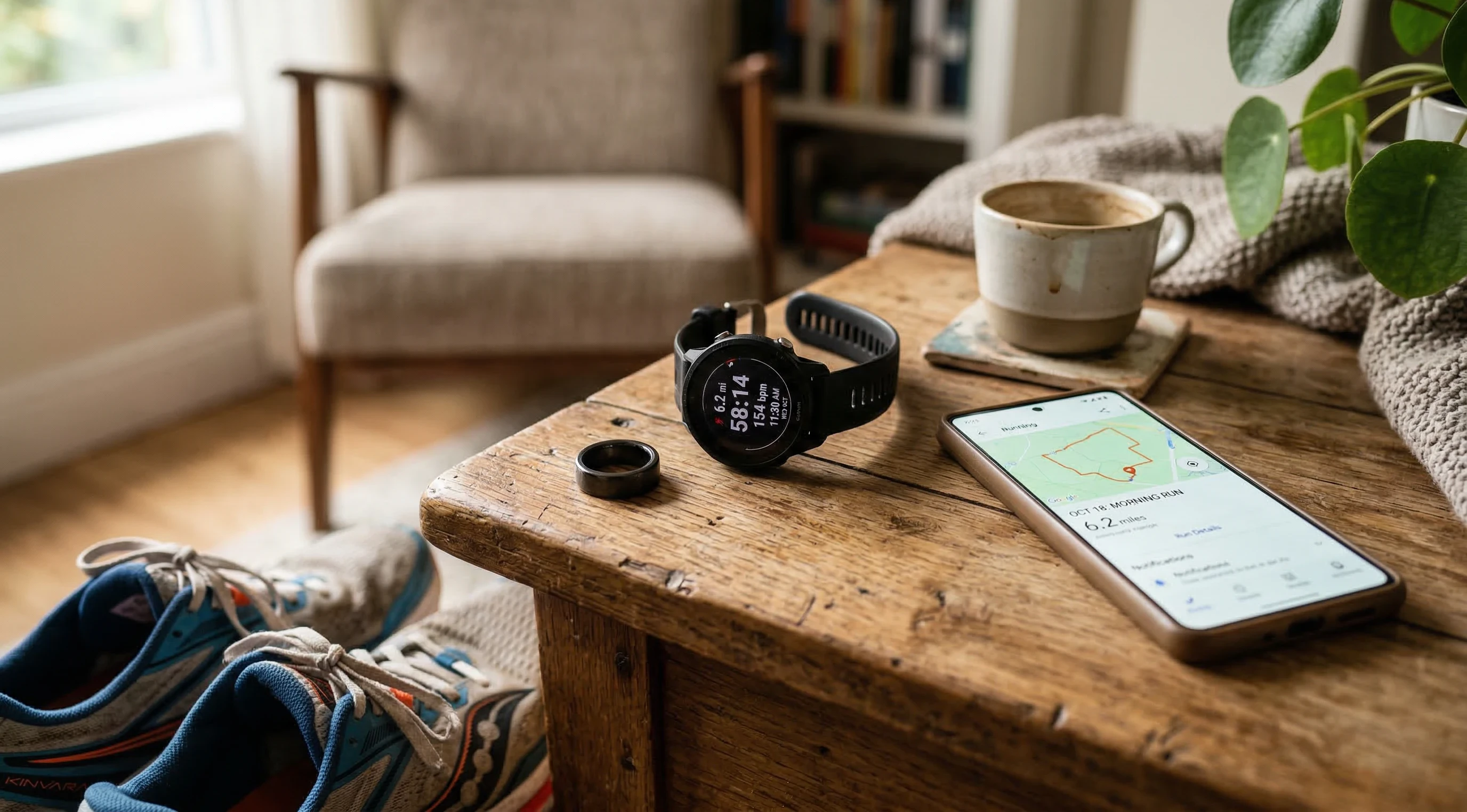
Getting to Know the Wearables
Oura Ring
What is Oura Ring?
The Oura Ring is a smart ring that packs a surprising amount of sensors inside a jewellery sized package. It focuses mostly on tracking your sleep, readiness, and recovery. If you love understated tech that doesn’t look like a fitness tracker, Oura is definitely worth checking out. You wear it all day and night, and it syncs to your phone for insights about sleep quality, heart rate, stress, and activity levels.
Who is Oura Ring Best For?
- Runners who want a simple, comfortable tracker they can wear all day and night
- Anyone who really values sleep and recovery stats as part of performance
- People who dislike big, sporty watches or visible tech gear
- Oura Ring Vs Whoop For Sleep Tracking
Oura Ring Pros and Cons
Pros:
- Super comfortable and lightweight
- Top notch sleep and recovery tracking
- Barely noticeable during runs or daily life
- Strong focus on overall wellbeing, not just workouts
Cons:
- No built in GPS or display
- Limited real time running metrics
- Activity auto detection can be imprecise
- Monthly subscription for deeper features
Garmin
What is Garmin?
Garmin is famous for their GPS running watches, with models for everyone from beginners to serious marathoners. Garmin devices track running distance, speed, heart rate, elevation, and even advanced training metrics like VO2 max and cadence. Many models connect with heart rate straps and music streaming too. Garmin watches are designed for those who want lots of actionable information while running and afterwards.
Who is Garmin Best For?
- Runners looking for accurate GPS and live stats
- Anyone who follows detailed training plans or intervals
- People who love analysing their pace, splits, and running dynamics
- Best Garmin Smartwatches Under £300
Garmin Pros and Cons
Pros:
- Super accurate running metrics and GPS
- Custom workout plans and pacing features
- Plenty of models to fit every budget or style
- Easy to sync data to Strava or other apps
Cons:
- Bigger and more noticeable on the wrist
- Shorter battery life with GPS enabled
- Can be a bit overwhelming for beginners
- More expensive for higher end models
Running Performance Comparison
Run Tracking
Heart Rate
Recovery Insights
Sleep Tracking
Battery Life
Comparing Oura Ring and Garmin for Running
Running Data and Metrics
Why It Matters: Runners rely on accurate stats for training and improvement.
Oura Ring: Tracks basic activity like step count, estimated calories, and general movement. It attempts to automatically log runs, but details are minimal (duration, distance by rough estimate, not GPS). Oura really shines in tracking how well you’re recovered before or after your run.
Garmin: Built in GPS and sensors provide precise distance, pace, elevation, and often cadence. Some models also show heart rate zones, interval timers, and running power. You get real time feedback mid run, and detailed breakdowns afterwards.
Better for Running Data: Garmin. You get far more actionable data to plan and review your runs.
Sleep and Recovery Insights
Why It Matters: Good runners know performance isn’t just about miles. Recovery counts too.
Oura Ring: Market leader in sleep and recovery analytics. Scores your sleep stages, readiness, heart rate variability, and gives recovery suggestions. Lots of runners, including myself, use Oura to adjust training based on sleep quality.
Garmin: Most newer Garmin models track sleep, but it’s not as detailed as Oura. Garmin’s recovery advice is more based on heart rate and exercise load, not sleep science.
Better for Recovery: Oura Ring.
How Each Device Feels to Wear
Why It Matters: If you hate how a tracker feels, you’ll stop wearing it.
Oura Ring: Looks just like a wedding band with no screen and no bulk. Super comfortable, even if you sleep with it on.
Garmin: Standard watch on the wrist. Most models are slim enough for daily wear, but you definitely notice it, especially if you’re not used to watches.
Better for Comfort: Oura Ring wins here.
Smart Features and Connectivity
Why It Matters: Everyone wants information on their own terms.
Oura Ring: Relies on syncing to your phone to see stats. No display or notifications.
Garmin: Displays notifications, controls music, weather, and many models let you customize data screens. Syncs wirelessly to plenty of training and health apps.
Better for Smart Features: Garmin, especially while running.
Battery Life and Charging
Why It Matters: You want your tracker ready when you are.
Oura Ring: Usually runs 5 to 7 days before needing a charge. Charges quickly in a little dock.
Garmin: Battery depends on the model. Standard running watches last 5 to 14 days in smartwatch mode, but only 5 to 36 hours with continuous GPS.
Better Battery Life: Oura Ring for daily tracking, but Garmin can keep up on long race days if you choose the right model.
Price and Value
Why It Matters: You want good features without breaking the bank.
Oura Ring: The ring itself costs about the same as an entry level to mid range Garmin. There’s also an ongoing monthly membership for in depth data and insights.
Garmin: You pay once, with no subscription fee. Simpler models are budget friendly, but top tier ones cost more.
Better Value: Garmin if you care about running stats. Oura if sleep and recovery insights matter more than live run tracking.
Accuracy: Which Tracks Running Performance Better?
When it comes to tracking your runs, accuracy makes a real difference. Garmin watches with GPS are known for reliable pace, distance, and elevation data, which is why they’re so popular among serious runners and marathoners. I’ve taken mine on trail races and road runs and found the splits and maps are nearly perfect each time.
Oura Ring does its best to estimate activity but doesn’t include built in GPS. When I wore both together, Oura did recognize my longer runs, but distance and pace were a rough estimate based mostly on steps. You don’t get live stats during the run, which means it’s tough to do intervals, speedwork, or mix up your pace based on real time feedback.
User Experience and App Ecosystem
- Oura Ring: Focuses on an easy to use app featuring eye catching sleep graphs and clear insights into readiness and recovery. The interface is stylish and calm, ideal if you prefer less clutter and a focus on how daily habits affect your health. However, it isn’t really a runner’s dashboard as running data is quite limited.
- Garmin: The Connect app is packed with running stats, training plans, and performance analysis tools. People who love stats and graphs will feel right at home. You can sync your data to apps like Strava to share with others or compete. The app can feel overwhelming for newcomers to detailed running analysis.
For pure running analysis, Garmin’s app gives a deeper look. Oura’s app is calmer and more about daily wellbeing and long term patterns.
Wearable Tech for Runners: What to Consider Before Choosing
- Do you want live stats and GPS mapping while you run?
- Is recovery or sleep tracking more your thing?
- Will you use other health or sports features?
- Are you okay with a ring or do you prefer a watch?
- Is a budget or ongoing subscription price a dealbreaker for you?
Answering these questions helped me pick the right tracker. If you want running performance loaded with features, Garmin is tough to beat. If you just want to keep tabs on health and recovery, and don’t care so much for live run data, Oura is a solid pick.
Oura Ring vs Garmin: Running Performance Comparison
Oura Ring
- Running Tracking No built in GPS
- Heart Rate Monitoring Excellent resting heart rate data
- Recovery Tracking Advanced readiness score
- Sleep Monitoring Industry leading sleep insights
- Comfort Lightweight ring design
- Battery Life 4 to 7 days
- Best For Recovery and sleep focused athletes
Garmin Running Watches
- Running Tracking Built in GPS and pace metrics
- Heart Rate Monitoring Accurate workout tracking
- Recovery Tracking Training readiness and recovery time
- Sleep Monitoring Detailed sleep stages
- Comfort Lightweight sports watch
- Battery Life 7 to 14 days depending on model
- Best For Serious runners and endurance athletes
Q & A: Oura Ring vs Garmin for Running
Q1. Does the Oura Ring track distance and pace during runs?
The Oura Ring can automatically log running sessions, but it doesn’t have built in GPS. It estimates distance and pace using motion sensors, which isn’t as accurate as a Garmin watch. For runners craving precise pace, splits, and route mapping, Garmin is a better option.
Q2. Can you use an Oura Ring and Garmin watch together?
Yes, plenty of runners use both. I sometimes wear Garmin for tracking my runs and Oura for sleep and recovery insights. The two focus on different areas of health and actually complement each other well. You’ll just need to charge both separately and use two apps.
Q3. Which is better for marathon training?
Garmin is better suited for marathon training as it gives you detailed GPS data, lets you game plan custom workout intervals, and tracks those long runs with much more precision. You also get useful pacing and recovery tools on your wrist.
Q4. Does Garmin or Oura Ring provide better sleep tracking?
Oura Ring comes out ahead for sleep tracking. Its sensors and app break down sleep cycles, latency, and it even gives personalized insights about how your rest affects recovery. Garmin’s sleep tracking has improved, but Oura is still more advanced here.
Q5. Can I go swimming with an Oura Ring or a Garmin watch?
Most Oura Rings are water resistant and fine for the pool. Many Garmin running watches (like Forerunners) are fully swim proof and offer swim data. If you plan to track detailed swim workouts, Garmin offers more features for your swims.
Q6. Is the subscription for Oura Ring worth it for runners?
If you’re into detailed health and recovery stats, the Oura membership can give a boost to your routine. Without the subscription, the ring provides more limited insights. Runners focused mainly on live run tracking and splits may find more immediate value in Garmin, which has no extra fee.
Q7. Which device has better battery life?
Oura Ring usually lasts longer (up to 7 days) with daily wear. Garmin battery life depends on your model and GPS use, but many models go for 5 to14 days in smartwatch mode and several hours while tracking GPS. For long events, some Garmins last well over a full day in GPS mode.
Q8. Is it easy to export running data to Strava or another app?
Garmin connects easily with Strava, TrainingPeaks, and other popular running platforms. Oura data can be exported, but the running details aren’t as in depth as Garmin’s. If sharing or analysing your run stats outside the brand’s app is important, Garmin is the more flexible option.
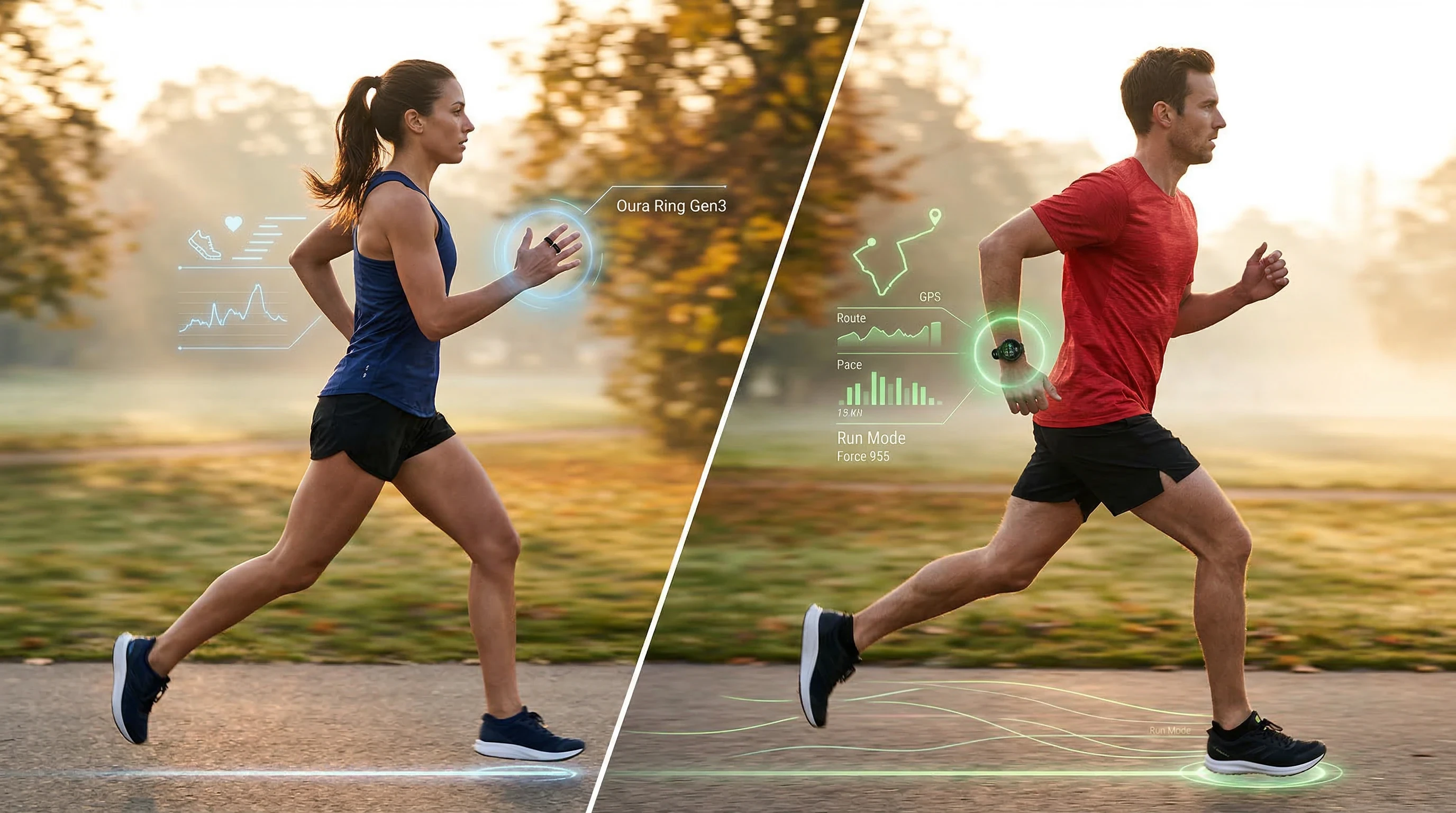
Summary: Which Should You Choose For Running?
Oura Ring and Garmin both have a place in a runner’s toolkit, but they focus on different needs. Garmin watches are fantastic for tracking every detail of your run, seeing live stats, and planning sessions right on your wrist. Oura Ring is excellent for recovery, sleep, and subtle, everyday health monitoring, especially if you dislike bulky, clunky watches.
- Pick Oura Ring if: You want amazing sleep and recovery tracking and don’t mind missing on the run data.
- Pick Garmin if: You want GPS accuracy, live pace, interval tools, and running performance stats designed for runners.
I lean on my Garmin for training days and race mornings, while my Oura Ring helps me make sure I’m not overtraining and am sleeping well. The choice really depends on your personal running style, goals, and how you plan to use your health data.
Which one matches your goals best? Feel free to share your experience or ask questions below.
Thanks
Thanks for reading this comparison review article titled Oura Ring Vs Garmin: Which Is Best For Running? I do hope that it has given you the information you need to make an informed choice between these two wearable health tech giants. For some extra reading, take a look at these related articles below.
Related Articles
Please let us know in the comments which type and brand of sleep tracking wearable device you are currently using or planning to purchase.
**Here is a bit of transparency. Our website www.vertevia.com does contain affiliate links and Amazon links. So, if you did make a purchase through the website, we may receive a small commission. This is at no extra cost to you whatsoever. It’s just a way for you to support us as we continue to bring you top quality content**
All the best!
Eamon