
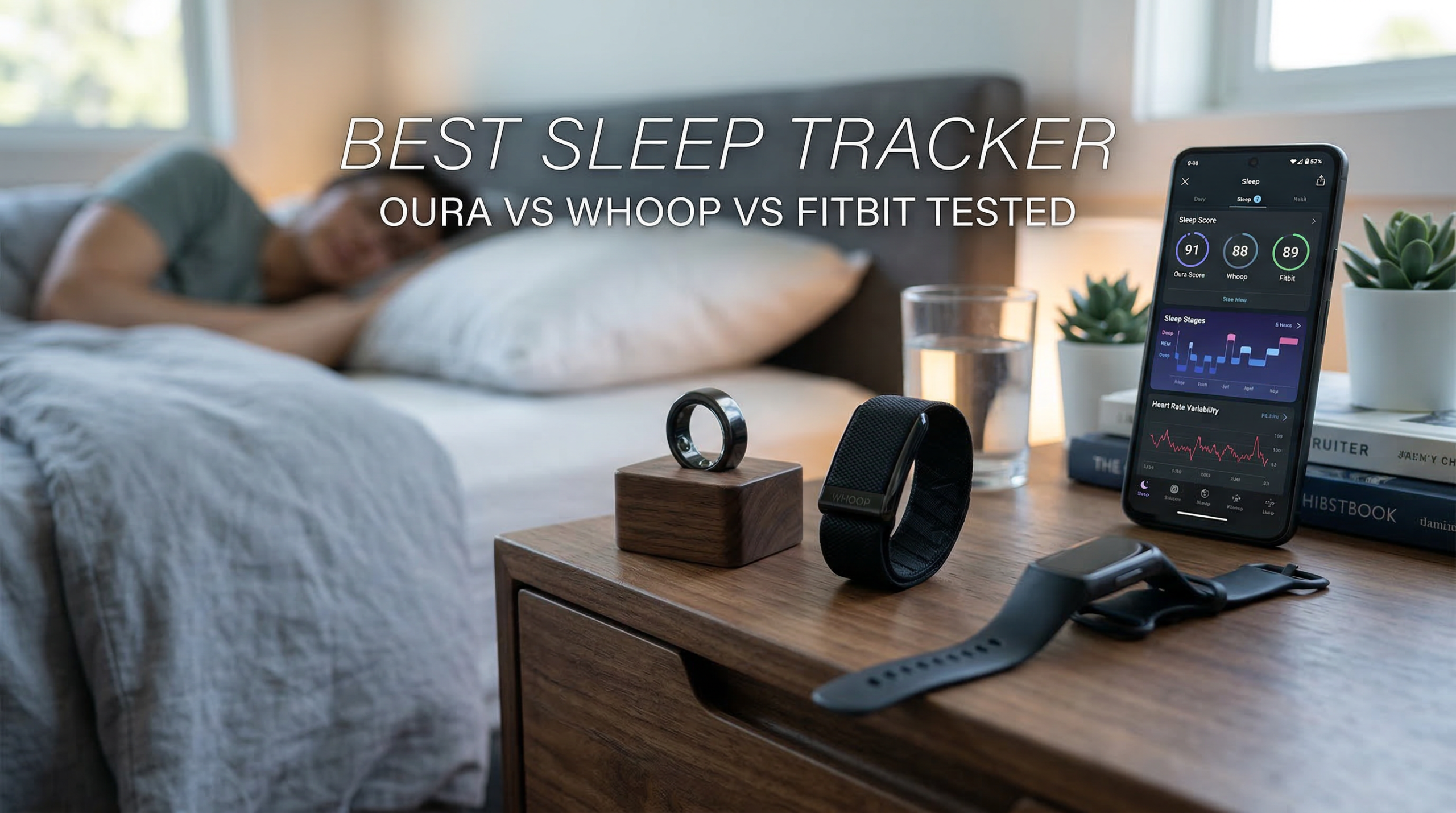
Today, we are talking about the Best Sleep Tracker: Oura Vs Whoop Vs Fitbit Tested. When you’re on the hunt for the best sleep tracker, three names usually get tossed around: Oura, Whoop, and Fitbit. I’ve spent months wearing, using, and analysing all three, so if you’re stuck choosing between them, you’re not alone. Each brand promises deep insights into your sleep, recovery, and overall health. But what actually makes them different, and which one makes sense for your needs?
Oura is known for its discreet ring design and science based sleep insights(How Accurate Is The Oura Ring?). Whoop is popular with athletes and folks who love numbers, giving lots of data on recovery and readiness. Fitbit, on the other hand, has been a leader in mainstream fitness tracking, offering handy health metrics with a familiar wearable design. I’ve tested all three in real life, and this side by side comparison covers features, accuracy, comfort, price, and practical experience to help make your decision a bit easier.
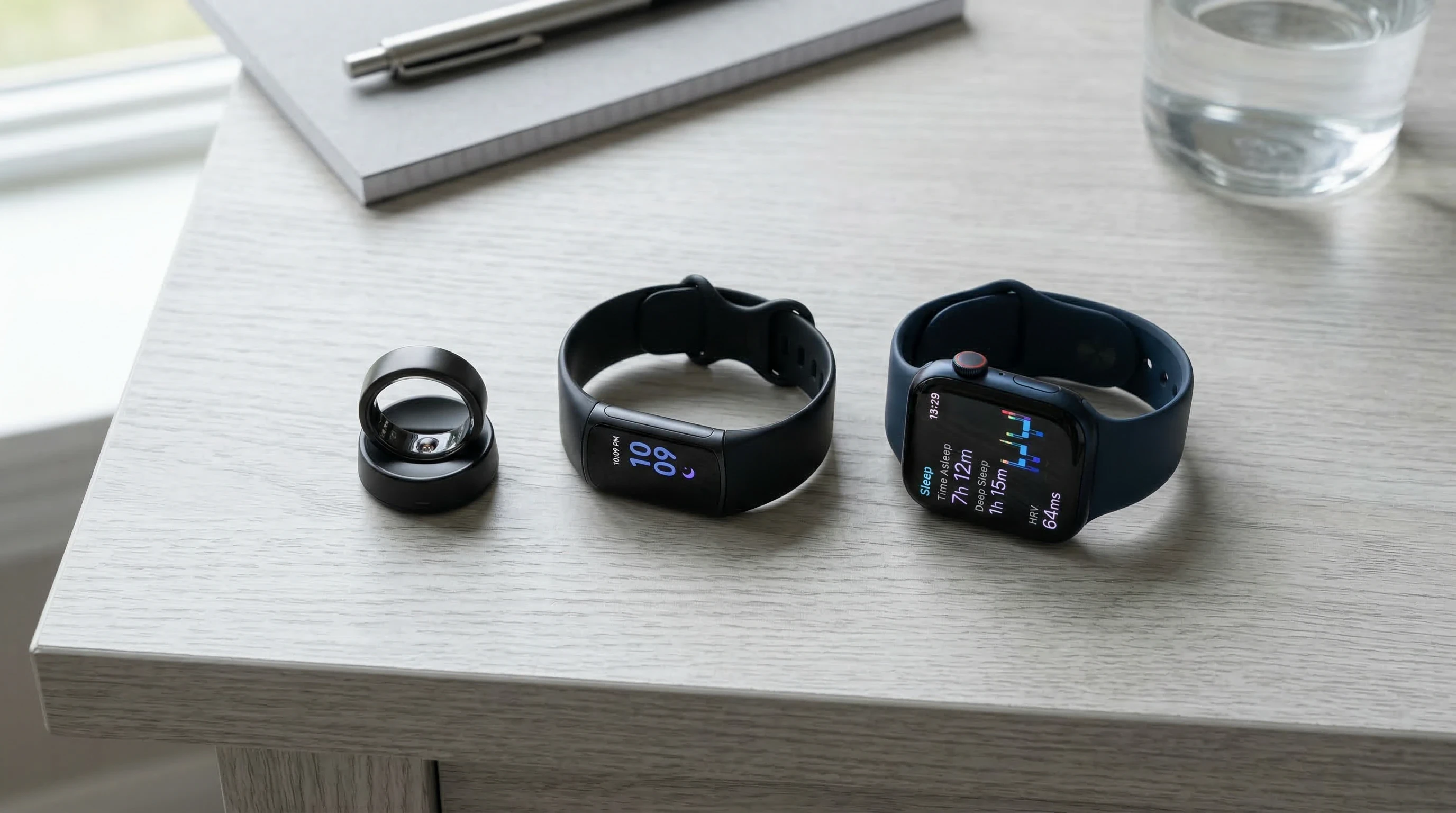
Meet the Sleep Trackers
What is Oura?
The Oura Ring is a small, lightweight ring you wear on your finger. It tracks sleep, readiness (think of it as how recovered you are), daily activity, heart rate, and temperature. The big thing with Oura is how seamlessly it fits into your life. It’s not flashy, but it’s packed with sensors and delivers surprisingly detailed reports each morning through its smartphone app. Its minimal design also means you don’t need to worry about another wristband clashing with your watch or jewellery style, making it ideal for day and night use.
Who Should Consider Oura?
- People who want accurate, detailed sleep tracking without a bulky device
- Anyone who dislikes wearing something on their wrist during sleep
- Biohackers and folks who appreciate advanced health metrics
- Those who want to step up their understanding of nightly recovery and body temperature fluctuations
Oura Pros and Cons
Pros:
- Super comfy, fingerprint sized design (great for sleepers who can’t do wristbands)
- Reliable sleep and readiness tracking, with precise temperature sensing
- Doesn’t need to be charged every day, you’ll get about a week per charge
- Light and subtle, doesn’t draw attention
- Water resistant for showering or swimming
Cons:
- Not cheap, especially with the membership fee for full features
- No screen or live feedback. Everything is in the app
- Limited activity and workout tracking compared to dedicated fitness bands
- Sizing requires a try at home kit before orderingWhat is Whoop?
What Is Whoop?
Whoop takes a different approach. Instead of a watch or ring, it’s a sensor packed band you wear on your wrist, bicep, or even in special clothing. Whoop digs into recovery, performance, strain, and sleep with loads of graphs and pro level stats. It’s popular with athletes and people into training optimization, but everyday users can benefit too, especially if you want to know how your habits affect your body’s ability to recover. You also get coaching tips that help you improve recovery or tweak exercise routines for best results. Take a look at this direct comparison Oura Ring Vs Whoop For Sleep Tracking.
Who Should Consider Whoop?
- People who want insight into overall recovery and performance, not just sleep hours
- Serious exercisers and athletes
- Anyone who wants daily feedback on lifestyle habits and stress
- Data lovers who don’t mind a technical learning curve
Whoop Pros and Cons
Pros:
- Truly in depth recovery and sleep data, lots to dig into
- No screen for distractions, just raw data in your app
- Fits multiple body locations (wrist, arm, or clothing)
- Removable battery pack lets you charge while wearing
- Water resistant for swimming and heavy workouts
Cons:
- Requires monthly membership (no free tier for most features)
- No watch display, so no quick glance feedback
- Bigger on the wrist than a ring and can feel snug overnight
- The app is data heavy and takes time to get used to
What is Fitbit?
Fitbit started as a step counter and evolved into a smart health wearable that tracks heart rate, sleep, activity, and more. Their newer models, including the Fitbit Sense, Charge, and Versa, focus on sleep stage breakdown, snoring, SpO2 (oxygen), heart rate, and holistic wellness metrics. Fitbit’s app is easy for beginners, and many features are available without a subscription, with only premium insights tucked behind a paywall. Fitbit also has community challenges, built in notifications, music control, and even a payment function for on the go convenience.
Who Should Consider Fitbit?
- Those who want an affordable, all in one fitness and sleep tracker
- People new to wearable health tech
- Folks who also want smart notifications, alarms, and a digital display
- Anyone interested in easy to read day to day health tracking
Fitbit Pros and Cons
Pros:
- Good value for the price, with lots of models to pick from
- Easy to use app and simple design
- Tracks a lot more than sleep (steps, exercise, heart rate, etc.)
- Fashionable device styles and smartwatch features
- Syncs with Apple Health and Google Fit easily
Cons:
- Sleep tracking accuracy isn’t quite as advanced as Oura or Whoop
- Requires wrist wearing (not ideal for everyone)
- Some features need a Fitbit Premium subscription
- Battery life on newer models can be shorter with always on features
Sleep Tracking Performance Score
Best Sleep Tracker Features Compared
Sleep Tracking Accuracy
Why It Matters: Accurate sleep insights help you actually improve your snooze routine.
Oura: Consistently strong at detecting sleep stages, time awake, and disturbances, thanks to sensors right on your finger (where blood flow signals are easiest to read). Oura reports feel super detailed, with a breakdown of REM, deep, light, and wake time. Over weeks and months, you can spot clear sleep patterns and pinpoint the impact of daily habits.
Whoop: Gives robust sleep stage details, with nightly scores for sleep consistency and recovery. I noticed Whoop was sometimes conservative about labelling a nap or waking event, but you get a helpful big picture sense of readiness each morning. The recovery scores are backed up by heart rate and HRV data, providing context over time for athletic improvements.
Fitbit: Reliable for most people but sometimes struggles on nights with a lot of tossing and turning. Handy for trends but less nuanced than Oura and Whoop when it comes to subtle wakeups or short naps. The graphs are easy to understand and make tracking progress simple.
Health and Recovery Insights
Why It Matters: Great sleep tracking isn’t helpful unless it connects to your overall health and readiness.
Oura: My favourite feature is the Readiness Score. It brings together sleep, HRV (heart rate variability), temperature, and activity to give you an easy number each day; a much more complete view than raw sleep minutes alone. Oura is continually adding research backed insights about women’s health, long term stress, and optimal activity patterns.
Whoop: Whoop’s recovery and strain metrics are detailed. For athletes, the daily Strain Score and Recovery Percentage make it easy to adjust workouts and understand the impact of poor sleep, diet, or even late night stress. The Journal feature allows you to add daily lifestyle notes, making it simple to connect patterns between sleep, caffeine, food, and exercise choices.
Fitbit: Fitbit combines sleep data with basic readiness info (Daily Readiness Score is available with Premium), activity, and heart rate. It’s more like a health dashboard but doesn’t quite match Oura or Whoop for fine tuned readiness and recovery insights. Still, Fitbit tracks breathing, snoring, and oxygen variations, making it a solid all rounder for people who want the big health picture.
Comfort and Wear Experience
Why It Matters: If a device feels annoying, you’ll leave it on your bedside table.
Oura: The ring is lightweight and after a day or two, I’d forget I was wearing it, even while tossing around in sleep. Sizing can be a pain, and you need to order a sizing kit first, but it’s worth it for long term comfort. Oura’s ring construction is durable and doesn’t snag on bedsheets or pillows.
Whoop: The soft band is comfy but feels tighter than a ring, and some sleepers prefer not to have anything on their wrist at night. Whoop’s fabric bands make a difference, though, and you can move it to your upper arm if needed. The device sits flat, so it doesn’t dig into your skin if you sleep on your side.
Fitbit: Comfort depends on the model. Charge and Inspire are slim, while Sense and Versa are larger with more smartwatch features. If you’re used to watches, most Fitbits feel fine for sleep. Silicone bands can sometimes cause sweat during hot nights, but overall most people adjust quickly.
Battery Life and Charging
Why It Matters: Charging every day gets old fast, especially if you want to track sleep 24/7.
Oura: Lasts about 5 to 7 days per charge. Quick top up and no hassling with cords every night. Its minimal charging base is easy to use and doesn’t clutter your bedside table.
Whoop: Charges in about 3 to 5 days, thanks to a removable battery pack that slides over the band, even while you wear it. Really handy for nonstop tracking and you don’t lose data during charging.
Fitbit: Varies by model but usually offers 5 to 7 days per charge. Older models may need more frequent charging with all day SpO2 or GPS use. Some watches now offer fast charge, letting you get a full day’s use in just 15 minutes.
App Experience and Data Access
Why It Matters: Data overload makes no sense if you can’t understand or use it.
Oura: The mobile app breaks down everything into easy graphs, trends, and tips. Super streamlined. No web dashboard though; everything’s done in-app. The app also highlights temperature trends and readiness suggestions based on changes over time.
Whoop: Gives you advanced stats, coaching, and peer group comparisons if you want. The app can feel a bit busy at first, but gets better with use. All data is on your phone; no desktop interface without workarounds. The app also links up with Strava and offers in-app community support for added motivation.
Fitbit: Fitbit’s app is probably the easiest to pick up right away. It offers sleep trends, comparisons to other users, and health reminders. You can flip between phone and internet dashboard easily. Fitbit’s web dashboard is good for viewing months of health data in one place.
Price and Value
Why It Matters: Sleep tech pricing is all over the place, from low cost trackers to high end wearables with subscriptions.
(Oura)
Mid to high (plus monthly membership)
Yes, for full data
Temperature, HRV, readiness, discreet ring design
(Whoop)
Monthly/annual membership only
Yes (device is included with plan)
Strain, recovery, in depth trends, group sharing
(Fitbit)
Range from budget to mid (device price up front)
No for basics, but yes for premium
Fitness features, smartwatch options, built in display
User Reviews and Community Reputation
- Oura: Most users love the comfort and deep sleep analytics, but mention the paywall for core features.
- Whoop: Favoured by athletes and number focused users. People like the non stop tracking and actionable insights, but not everyone enjoys the subscription model.
- Fitbit: Gets lots of positive feedback for versatility and friendly app design, but some question sleep stage accuracy and the value of a Premium upgrade.
Overall Reputation: Each tracker has its fans. If you know what matters most, whether it’s comfort, insights, price, or fitness features, you’ll probably be happy with your pick.
Picking the Best Sleep Tracker for Your Needs
Every sleep tracker in this comparison gets the job done for general insights, but your choice depends on what matters to you personally. Deciding between a ring, a band, or a smartwatch depends on how you prefer to wear tech at night and how much health information you want to track.
Choose Oura if you:
- Want advanced sleep and recovery insights in a ring (no wristband)
- Appreciate detailed trends and science backed tips
- Don’t mind paying a bit more for next level comfort
- Value subtlety and a stylish, wearable device
Choose Whoop if you:
- Want pro level training data on sleep, strain, and recovery
- Are okay with a monthly subscription
- Prefer not to have another screen or smartwatch in your life
- You’re an athlete or want coaching tips to step up your performance
Choose Fitbit if you:
- Want an affordable, all in one device with strong health and fitness integration
- Like having notifications, alarms, and a watch face for daily convenience
- Prefer not to worry about subscriptions just to get started
- Want simple health trends and social fitness features
Best Sleep Tracker Comparison
Oura Ring
- Sleep Tracking Industry leading accuracy
- Sleep Score Advanced readiness insights
- HRV Tracking Excellent overnight analysis
- Comfort Lightweight ring design
- Battery 4 to 7 days
- Best For Deep sleep insights
Whoop Strap
- Sleep Tracking Highly accurate with coaching
- Sleep Coach Personalized recommendations
- HRV Tracking Elite recovery metrics
- Comfort Soft strap wearable
- Battery 4 to 5 days
- Best For Athletes and recovery
Fitbit
- Sleep Tracking Good consumer level tracking
- Sleep Score Easy to understand scoring
- HRV Tracking Basic insights
- Comfort Wrist based tracker
- Battery 5 to 7 days
- Best For Everyday health users
Frequently Asked Questions: Oura vs Whoop vs Fitbit
Q1.How accurate are these devices for sleep tracking?
Oura and Whoop both use advanced sensors and algorithms, and their data lines up closely with lab grade polysomnography for most people. Fitbit is solid for daily use, but may be less reliable for tracking naps or wakeups in light sleepers.
Q2. Can they recognise naps?
Oura and Whoop recognize naps automatically and add them to your daily stats. Fitbit is hit or miss with naps, picking up longer daytime sleep but not always tracking shorter rests.
Q3.Can I wear these trackers in the shower or swimming?
Oura and Whoop are water resistant. You can wear them in the shower and even for a swim. Most Fitbit models are also water resistant, but I always check your specific device’s rating before taking the plunge.
Q4.Is it worth paying for Oura or Whoop membership?
The membership fee for Oura and Whoop is what unlocks the detailed charts, scores, and health trends. If you like seeing detailed insights, it’s worth it. If you just want basics, Fitbit lets you skip a subscription for core features, though their premium data is locked behind a paywall.
Q5.Which is best for athletes or active people?
Whoop and Oura both offer daily recovery and readiness tracking, but Whoop goes deeper on strain and workout insights. For serious athletes, Whoop usually stands out.
Q6.Does Fitbit’s sleep accuracy compare to Oura or Whoop?
Fitbit does a decent job and is great for tracking trends, but people who want deep sleep stage analytics or super detailed nightly insights will find Oura and Whoop more accurate.
Q7.Can I sync my sleep data to Apple Health or Google Fit?
Oura and Fitbit both sync data to Apple Health and Google Fit, making it easy to connect your health info. Whoop doesn’t offer as much integration with these platforms yet.
Q8.Is it uncomfortable to wear a ring or band all night?
Comfort depends on your personal preferences. Oura’s ring is light and most people forget it’s there. Whoop’s band can feel snug if you’re sensitive to wristbands overnight, but can be moved to your upper arm. Fitbit wearables are comfortable for most, and you have several styles to pick from.
Summary
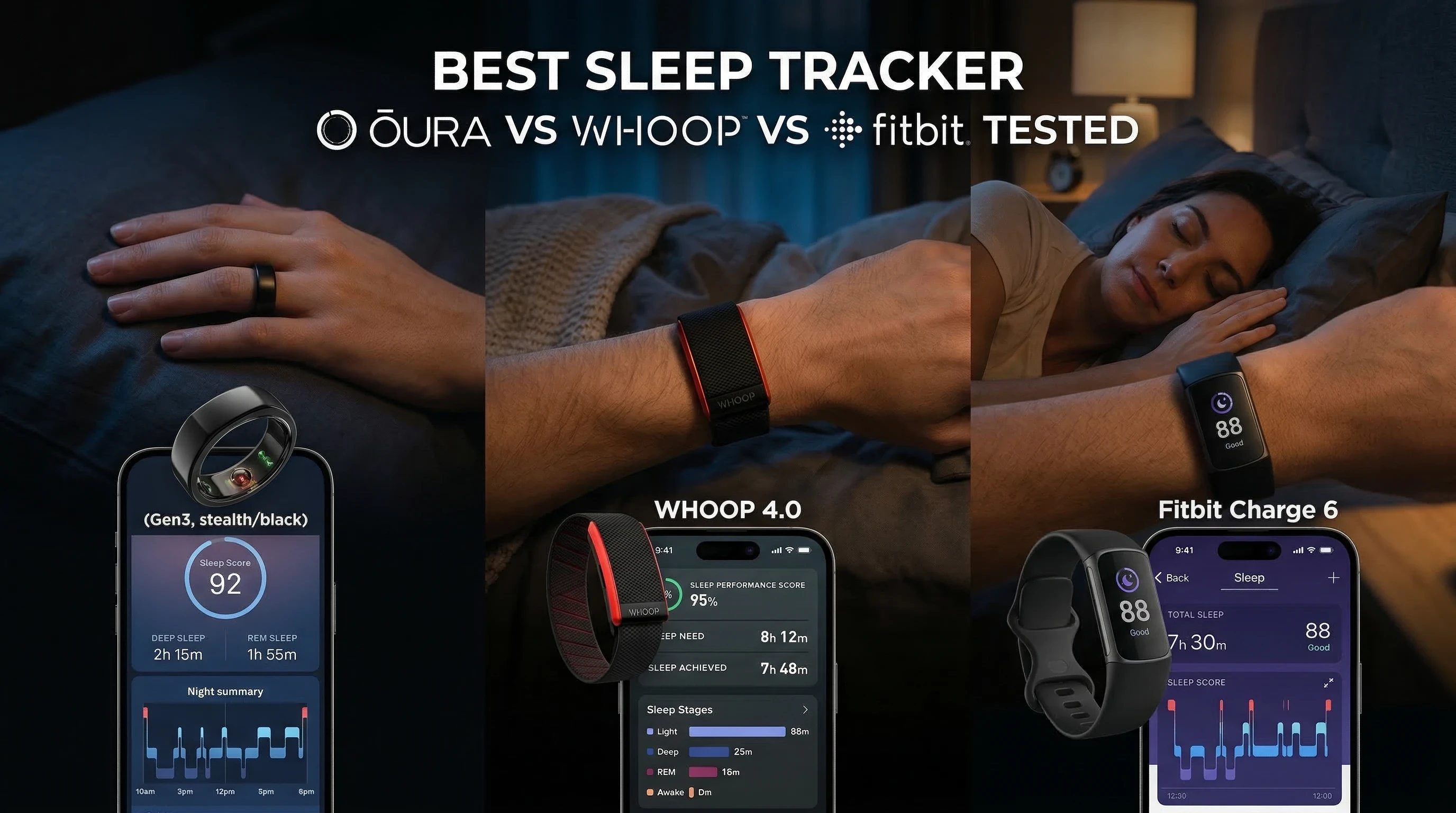
Choosing the right sleep tracker is about fitting your lifestyle, comfort, and what info you want to see every morning. I find Oura best for effortless, high quality sleep tracking, Whoop for maximizing recovery and workouts, and Fitbit for affordable all in one fitness and sleep stats. Let me know which sleep tracker you use or are curious about. I’m always up for comparing notes on these wearable gadgets!
Related Articles
Please let us know in the comments which type and brand of sleep tracking wearable device you are currently using or planning to purchase.
**Here is a bit of transparency. Our website www.vertevia.com does contain affiliate links and Amazon links. So, if you did make a purchase through the website, we may receive a small commission. This is at no extra cost to you whatsoever. It’s just a way for you to support us as we continue to bring you top quality content**
All the best!
Eamon