
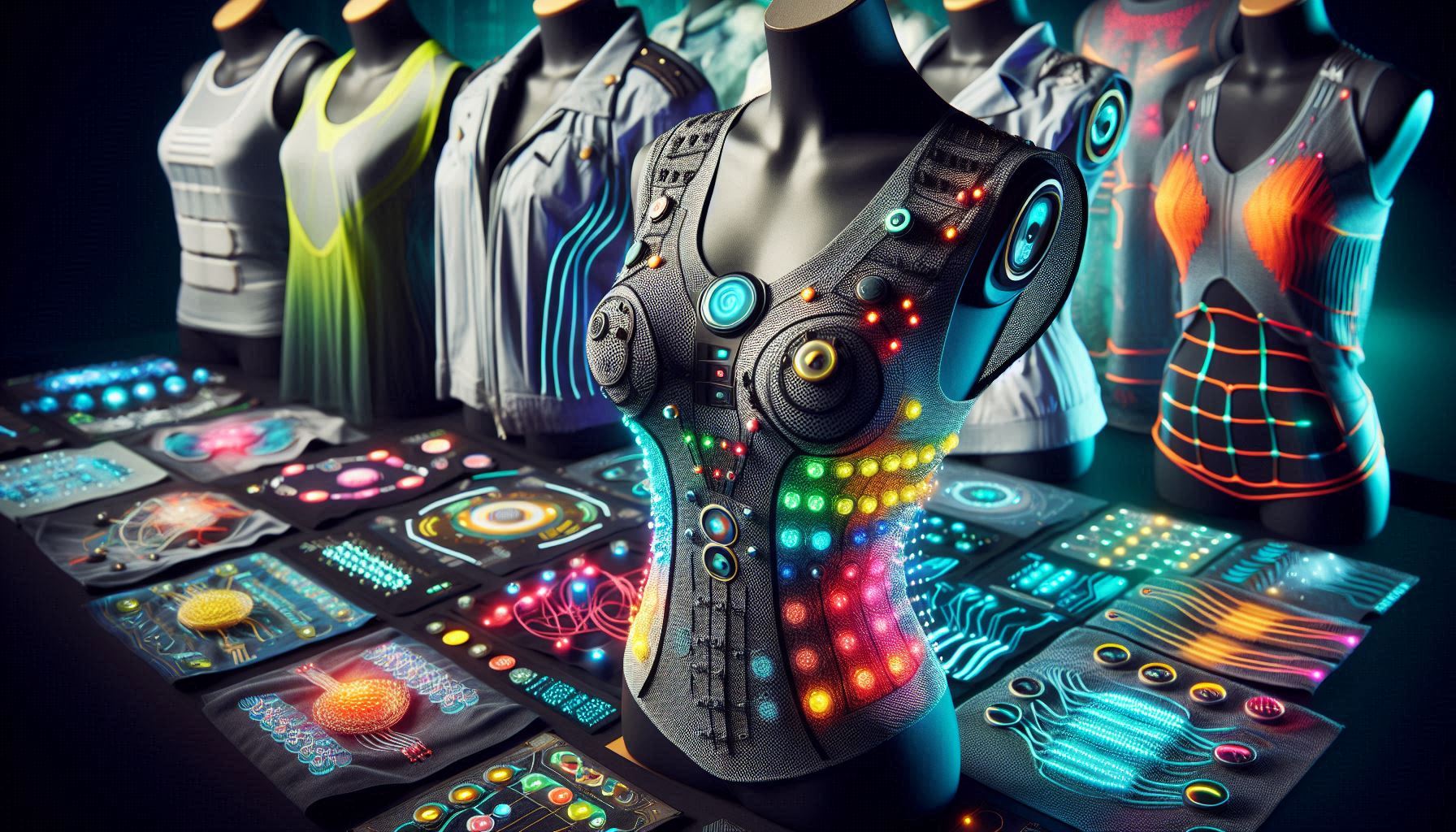
Have you ever heard of Smart Textiles or E-Textiles? Well, these latest innovations are taking the wearable health tech world by storm. In this article titled Smart Textiles And E-Textiles: The Next Frontier In Wearable Health Tech, we shall be taking a deeper look into these fascinating tech advances.

Introduction
The evolution of wearable health technology has been nothing short of extraordinary. What started as simple step counters has grown into an industry of highly advanced, miniaturised systems that can monitor our heart rate, track our sleep patterns, and even analyse our hydration levels in real time. The latest breakthrough in this ongoing revolution is the development of smart textiles and e-textiles.
These are fabrics embedded with sensors, conductive threads, and microelectronics that can seamlessly integrate into our everyday clothing, offering continuous health monitoring without the need for separate gadgets strapped to our wrists or clipped to our clothing.
Imagine a shirt that measures your breathing rate during exercise, or socks that track circulation to help prevent injury. With smart textiles, the technology becomes part of the garment itself. The goal is to make health monitoring so natural and effortless that you forget you are wearing a medical grade device. For many, this could mean early detection of health concerns, personalised performance data for fitness goals, and better management of chronic conditions, all without sacrificing comfort or style.
What Are Smart Textiles and E-Textiles?
Smart textiles are fabrics designed with integrated electronics that can sense, react, or adapt to environmental conditions or user needs. E-textiles, short for electronic textiles, take this concept further by embedding conductive threads, microchips, and wireless connectivity directly into the fabric’s weave or knit.
They are categorised into two main types:
Passive Smart Textiles
These can sense environmental changes such as temperature or pressure but do not actively respond. An example would be a shirt that detects sweat levels and sends the data to your smartphone.
Active Smart Textiles
These not only sense changes but can also respond to them. For instance, a jacket that automatically warms up when it detects cold weather, or a compression garment that adjusts tension based on muscle fatigue.
How Smart Textiles Are Used in Wearable Health Tech
In health applications, smart textiles are designed to monitor vital signs, assist with rehabilitation, improve athletic performance, and even aid in remote patient monitoring. The sensors within the fabric can measure:
- Heart rate variability
- Respiration rate
- Blood oxygen levels
- Muscle activation
- Body temperature
- Movement and posture
The collected data is transmitted wirelessly to an app or cloud based system, allowing for real time feedback and long term tracking.
Benefits of Smart Textiles in Health Tech
Comfort and Discreetness
Smart textiles integrate technology directly into your clothing, removing the need for bulky devices.
Continuous Monitoring
Unlike wearable gadgets that you may forget to wear, clothing is a natural part of your daily routine, enabling constant tracking without extra effort.
Versatility
Can be used for athletes, patients with chronic illnesses, elderly individuals needing fall detection, or anyone interested in proactive health management.
Data Driven Insights
Provides precise, continuous data that can be used for both personal wellness and medical purposes.
Key Features to Look For in Smart Textiles
When considering a smart textile for health monitoring, look for:
- Sensor Accuracy – Reliable measurements of vital signs and movements.
- Connectivity – Wireless data transfer to a smartphone or medical device.
- Comfort and Fit – Breathable, stretchable fabrics that feel like regular clothing.
- Durability – Withstands repeated washing and daily wear.
- Battery Life – Integrated power sources that last for multiple days before recharging.
- App Integration – User friendly interfaces that present your data clearly.
Price Expectations
Smart textiles are still an emerging category, so pricing can vary widely. Entry level products might cost around £100 to £200 for basic monitoring garments. Mid range options with more advanced sensors and better connectivity could be between £250 and £500. Premium solutions with multi sensor capabilities, medical grade accuracy, and integrated AI analysis can reach £800 or more.
Subscription costs for cloud storage, advanced analytics, or remote clinician access may add £5 to £20 per month, depending on the service level.
Pros and Cons of Smart Textiles in Wearable Health Tech
Pros
- Seamless integration into daily life
- High comfort and minimal bulk
- Continuous and real time monitoring
- Potential for early detection of health issues
- Customisable for different needs
Cons
- High initial cost compared to basic wearables
- Technology still developing, so not all products are equally accurate
- Washing and care requirements may be more delicate
- Battery integration can limit garment flexibility
- Dependence on smartphone or internet connectivity for full functionality
Who Should Use Smart Textiles and Who They Are Most Suitable For
Smart textiles are especially suited for:
- Athletes who want detailed performance data without extra gear
- Chronic condition patients who require continuous monitoring of vitals
- Elderly individuals who benefit from fall detection and mobility tracking
- Rehabilitation patients who need physiotherapy progress monitoring
- Health conscious consumers seeking proactive wellness tracking
They may be less suitable for people who prefer minimal or no tech integration in their clothing, or those who are unwilling to invest in premium prices for advanced monitoring features.
How to Get the Best from Your Smart Textile Wearable Tech
To maximise benefits:
- Wear the garment consistently for accurate trend data
- Ensure proper fit, as loose or tight spots can affect sensor accuracy
- Follow care instructions carefully to prolong sensor life
- Regularly update the companion app for better features and bug fixes
- Use the data to make informed lifestyle changes, not just as a novelty
- Combine insights with professional medical advice if you have health concerns
6 Frequently Asked Questions
1. Are smart textiles safe to wear all day?
Yes, the electronics are embedded in a way that they do not pose harm under normal use, but follow the manufacturer’s care guidelines.
2. Can smart textiles go in the washing machine?
Many are washable but require gentle cycles or protective covers for the electronics. Always follow product instructions.
3. Do smart textiles need charging?
Yes, garments with active sensors require charging, though some use detachable modules for easy removal.
4. Are they accurate enough for medical use?
Some smart textiles achieve medical grade accuracy, but this varies by product and should be confirmed with specifications.
5. Will they work without a smartphone?
Most need a smartphone or tablet for data display, though some can sync to standalone hubs.
6. How long do smart textiles last?
With proper care, they can last as long as standard high quality activewear, though the electronic components may need replacement after a few years.

Conclusion
Smart textiles and e-textiles represent a natural and exciting evolution in wearable health technology. By weaving sensors and electronics directly into everyday garments, they make continuous health monitoring easier, more comfortable, and more integrated into daily life. For athletes, patients, and health conscious individuals, this means access to personalised data without the need to remember a separate device.
While there are challenges such as cost, care requirements, and evolving technology standards, the potential benefits far outweigh the drawbacks for many users. As innovation continues, prices are likely to fall, accuracy will improve, and smart textiles could become as common as today’s fitness trackers. The next frontier in wearable health tech is not something you strap to your wrist. It is something you wear naturally, without even thinking about it.
Our Thanks!
Many thanks to you for reading this article on Smart Textiles And E-Textiles: The Next Frontier In Wearable Health Tech. We hope that you have found it useful. If you would like to read some related content, please take a look through our blog. You might like one of our related articles which is titled What Are Smart Textiles? A Practical Guide For Health Bloggers, E-Textile Sportswear: Monitoring Form, Heart Rate and Recovery, Smart Clothing For Seniors: Vital Sign Tracking Without Gadgets, Best Fitness Trackers For Under £200.
Please let us know in the comments which type of wearable health tech device you are currently using or plan to buy in the future! The comments section is just underneath this article!
**Here is a bit of transparency. Our website www.vertevia.com does contain affiliate links and Amazon links. So, if you did make a purchase through the website, we may receive a small commission. This is at no extra cost to you whatsoever. It’s just a way for you to support us as we continue to bring you top quality content**
All the best!
Eamon