

Welcome to Vertevia and our comparison review Garmin Vs Polar: GPS Running Watch Battery Life Showdown. Battery life in GPS running watches is something I pay very close attention to, especially since a dying watch on a long run can be a real let down. Garmin and Polar are two of the most trusted names in running tech, and both brands do a solid job offering watches that last through races, workouts, and even a few days without a recharge. Deciding between them means digging into the details of how their batteries actually hold up in the real world.
Garmin is known for high end sports watches, loaded with features and backed by a huge user community. Polar, meanwhile, keeps things simple and reliable with strong focus on training stats and accuracy. Both bring different approaches to battery performance, so knowing what you need, whether it’s marathon training, ultrarunning, or casual jogs, makes a difference in finding the right fit.
This comparison covers the battery life factor between Garmin and Polar GPS running watches. We’ll break down the top models, share what you can expect for different types of users, and give plenty of clear, hands on info to help you make a confident choice.
Understanding Battery Life in GPS Running Watches
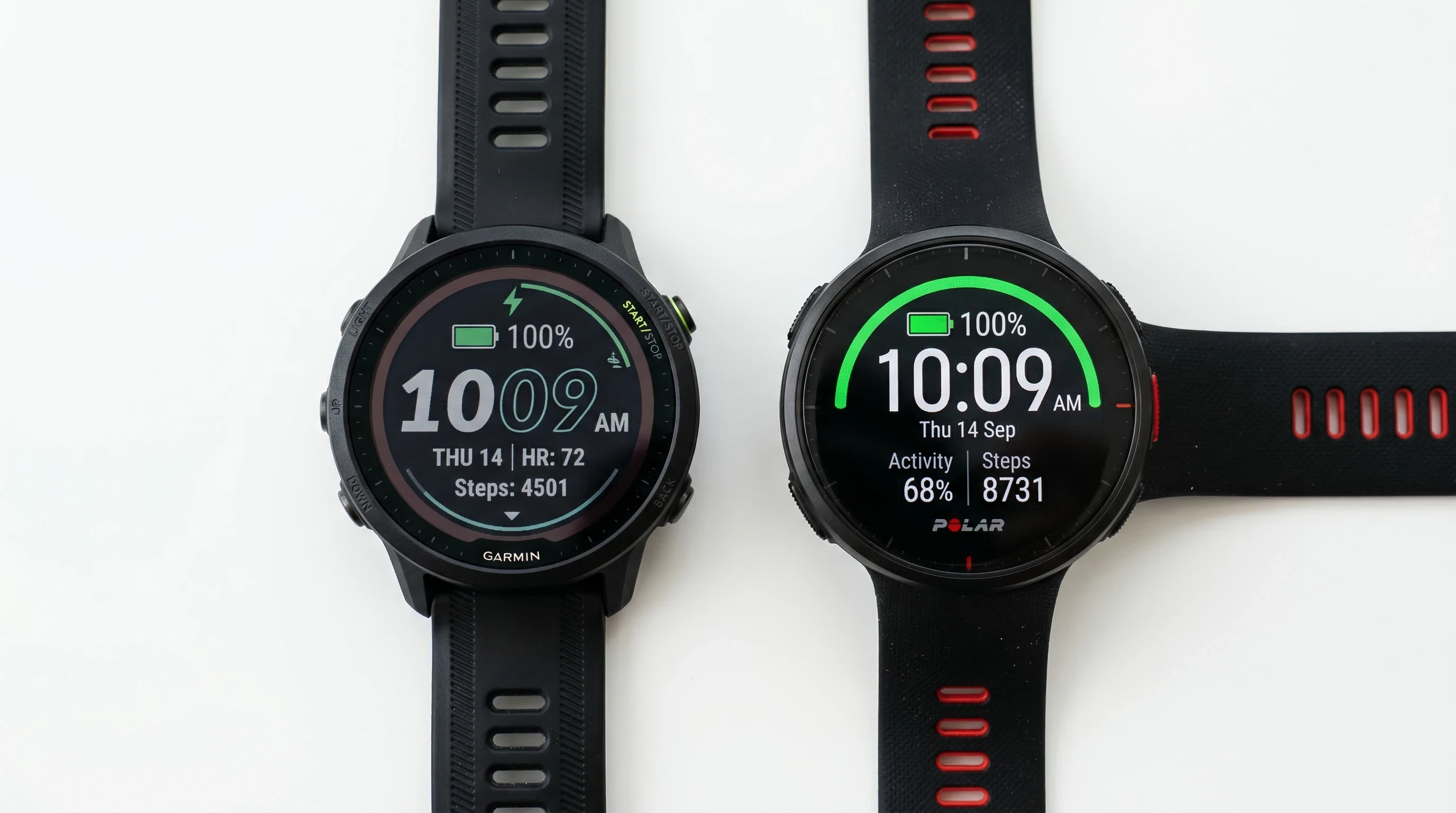
Before getting into the differences, it’s helpful to know how battery life is measured for running watches. Brands like Garmin and Polar rate battery performance using several key criteria:
- GPS Mode: How long the battery lasts with GPS tracking fully on, often the main thing runners care about.
- Smartwatch Mode: Battery duration when used just for smart notifications and basic watch functions, but with no active GPS.
- UltraTrac or Power Save Mode: Features that reduce GPS polling rate or dim the display to stretch battery life as much as possible.
- Actual Usage: Real world battery life depends on things like always on display, heart rate tracking, music playback, and backlight usage.
Manufacturers provide their own estimates, but I’ve found that real life doesn’t always match the numbers printed on the box. GPS accuracy settings, frequent syncing, and even the weather can make a difference. For cold weather runners, battery longevity drops faster, and for those who run with a lot of features turned on, you may not get max runtime.
GPS Battery Performance Comparison
Overview: Garmin vs Polar Battery Life Approach
What to Expect from Garmin GPS Watch Batteries
Garmin has a big range of watches, from the Forerunner and Fenix lines to the lightweight Venu and Enduro. Most Garmin devices aim for a balance of features and longevity, so you’ll find:
- Steady GPS runtime, usually from around 6 hours on smaller watches up to 36 hours and beyond on premium models
- Smart battery saving options like UltraTrac, which toggles GPS sampling intervals for endurance events
- Solar charging in some top end models like Fenix Solar and Instinct Solar that can add extra time between charges
Garmin watches are built for athletes who want a lot of cool extras, music, mapping, Bluetooth, SpO2 sensors, and more, so battery life can shift depending on which features you use. If you are searching for cheaper prices, take a look at these Best Garmin Smartwatches For Under £300.
What to Expect from Polar GPS Watch Batteries
Polar watches like the Grit X, Vantage, and Ignite series keep things simpler, focusing on workout and health stats. Battery philosophy here is about keeping things reliable:
- GPS mode battery ratings are often a bit higher for the price, usually from 8 hours up to 40 hours for top models
- Less background drain thanks to fewer extras like music, WiFi, or third party apps
- Unique sleep tracking and heart rate monitoring algorithms that use only a trickle of power
If your main goal is solid running performance with few distractions, Polar sometimes squeezes more battery life out of a similar sized watch because it avoids power hungry extras.
Battery Life Showdown: Model by Model Comparison
Garmin Forerunner 255 vs Polar Pacer Pro
The Forerunner 255 is rated for about 30 hours of GPS and around 14 days in regular smartwatch mode. The Polar Pacer Pro is rated to go 35 hours with full GPS and about 7 days as a regular watch.
Both will easily get through a full day of serious running and leave plenty of juice for the next one, but Garmin gets a small edge in everyday mode while Polar does a bit better for longer GPS sessions.
Garmin Fenix 7 (Standard) vs Polar Grit X Pro
The Fenix 7 comes in several editions, but for battery, you get about 57 hours of continuous GPS or up to 18 days in smartwatch mode. The Grit X Pro runs close to 40 hours in standard GPS and about 7 days with average use. Garmin’s solar models can recharge with sunlight; even light exposure will stretch usage more. If you often do long events or multi day hikes, Fenix is built for lasting longer between charges.
Garmin Venu 2 vs Polar Ignite 3
Venu 2 runs for about 22 hours with active GPS tracking, or nearly two weeks in normal mode. The Polar Ignite 3 reaches 30 hours in GPS and about 5 days as a basic watch. For lighter, slim profile options, Polar pulls ahead in GPS battery life but is a bit behind for full feature smartwatch usage. Another comparison article of ours is Polar Vs Withings: What’s Better For Fitness Tracking?
All those numbers are estimates and will change depending on what you have enabled (notifications, Bluetooth, extra sensors). In my experience, both brands deliver reliable battery performance, but your actual experience will depend on settings and use patterns.
Hands On Experience: Battery Performance in Real Life
Battery specs are useful, but after using both Garmin and Polar watches, I know what really matters is real life. Here’s what stands out when I take these watches on daily runs and longer adventures:
- Garmin: For marathons, the Forerunner and Fenix rarely need a midrace top up, and even with phone connected, music streaming, and all day tracking, I almost never worry about the watch dying. Being able to change settings like UltraTrac is handy for users who want to push battery limits. Solar charging truly works, especially on sunny outings.
- Polar: Polar watches generally drain slower for guided runs or straight forward cardio sessions since there are fewer background apps running. I can go several days between charges, even when tracking sleep and continuous heart rate. If I use navigation heavily, battery drops more quickly, which matches Garmin too.
I have noticed that long term battery degradation is gradual for both brands, which shows that quality construction matters. Software updates factor in too, so keeping your firmware current really helps maximize battery lifespan.
Extra Features and Their Impact on Battery Life
Every extra built into a running watch uses some battery, and knowing what features soak up the most power can help you stretch out more mileage from one charge:
- Always On Display: Garmin offers more options for this, but it draws more power. Turning it off saves battery.
- Music Playback: Garmin lets you load up and play Spotify and other music straight from your watch. Polar skips that to save battery. Streaming music will slash battery life by several hours.
- Navigation & Maps: Both offer basic navigation features, but Garmin mapping is far more advanced and requires more power to run.
- Sensor Pairing: Connecting a chest strap, bike sensor, or syncing with your phone uses more battery on both Garmin and Polar.
Turning off things you don’t need during normal runs, like music, live tracking, or bright backlight, gives you more time between charges, whichever brand you choose.
User Feedback on Garmin and Polar Battery Life
- Garmin users: Many share that they can squeeze out a full week between charges with standard settings and love having the flexibility to tweak battery saving modes. Some note that using mapping or music a lot is tough on the battery, but enjoy being able to tailor power settings.
- Polar users: Appreciate that you can usually stretch a bit more battery out of a smaller, lighter watch. Easy menus and simple battery stats make it easier to monitor charge. Fewer people complain about mystery battery drops because Polar firmware is stable.
Both camps have loyal fans who appreciate the reliability. In the end, much depends on which style and setup you prefer for your running and daily use.
Garmin vs Polar Battery Life Comparison
Garmin Watches
- Smartwatch Mode Up to 14 days or more
- GPS Mode 20 to 60 hours depending on model
- Ultra Mode Extended multi day tracking
- Charging Speed Fast charging supported
- Power Saving Advanced battery management
- Best For Long distance runners and endurance athletes
Polar Watches
- Smartwatch Mode Up to 7 days
- GPS Mode 30 to 40 hours
- Ultra Mode Power saving options available
- Charging Speed Moderate charging time
- Power Saving Basic optimisation modes
- Best For Fitness focused runners and training tracking
Q and A: Garmin vs Polar Running Watch Battery Life
Q1.Which brand offers the best battery life for marathon training?
Both Garmin and Polar are up for marathons without breaking a sweat. For longer multiday events, high end Garmin models like Fenix with solar charging will keep you running longer before a recharge. Polar is a solid pick for those who want simple and steady battery power without fuss.
Q2.How does music playback affect battery life?
Garmin watches allow you to store and play music, but this can drop battery life by as much as 30 percent on workout days. Polar doesn’t feature music playback, so their batteries last longer if tunes aren’t on your wish list.
Q3.Does solar charging on Garmin watches really work?
Solar charging on Garmin works best in bright sunlight and can add a few hours extra to the battery, especially during long, outdoor sessions. You’ll still need to plug in, but it’s a helpful bonus in summer months.
Q4.Are Polar watches easier on battery because of fewer features?
Yes, Polar’s focus on basic running features means fewer background gadgets and sensors always drawing current. For those who want simplicity, you usually get more hours in GPS mode for every dollar spent.
Q5.Will battery life drop as the watch ages?
All rechargeable batteries age gradually, but both brands use good quality batteries meant to last for years. Keeping your software up to date and avoiding draining the battery fully helps them last longer.
Q6.Which watch can go longer in smartwatch mode?
Garmin watches generally run longer in everyday smartwatch mode, especially within the Fenix and Forerunner groups. Polar stays charged around a week, which is more than enough for most users.
Q7.Does the weather affect battery life?
Absolutely; very cold days will sap battery on long runs. Both Garmin and Polar watches feel the effect, though Polar sometimes holds on a bit better thanks to efficient hardware. Wearing the watch under a sleeve can smooth things out during winter adventures.
Q8.Can you replace the battery yourself?
Most Garmin and Polar watches use sealed batteries not meant to be swapped by users. If you experience a big drop in battery life outside of standard aging, reach out to the company’s support. In most cases the watch will be upgraded long before needing a battery change.
Which GPS Running Watch is Right for You?
Garmin and Polar each have strengths when it comes to battery life. Garmin stands out if you want a feature packed watch, the power to tweak battery settings for races and training, and extra features like solar charging. Polar is the best pick for runners wanting steady, reliable performance without fuss, and more time between charges by default.
If you want a powerful, all day running watch that can last for days in GPS mode, Garmin is a great bet. If you like focusing on running stats and squeezing out the longest GPS battery for the money, Polar will be your go to brand. Trying both in store gives you a better feel, but taking time to read reviews and user feedback ensures you won’t regret your battery decision down the road.
Here’s the bottom line. No matter which you choose, you’ll end up with a watch ready to handle your toughest training, your longest runs, and those moments when you accidentally forget to charge overnight. Also, take a look at this comparison of the Oura Ring Vs Garmin: Which Is Best For Running.
Related Articles
Please let us know in the comments which type and brand of fitness tracking wearable device you are currently using or planning to purchase.
**Here is a bit of transparency. Our website www.vertevia.com does contain affiliate links and Amazon links. So, if you did make a purchase through the website, we may receive a small commission. This is at no extra cost to you whatsoever. It’s just a way for you to support us as we continue to bring you top quality content**
All the best!
Eamon